7 Best FPLfun Mini League Side Features That Matter
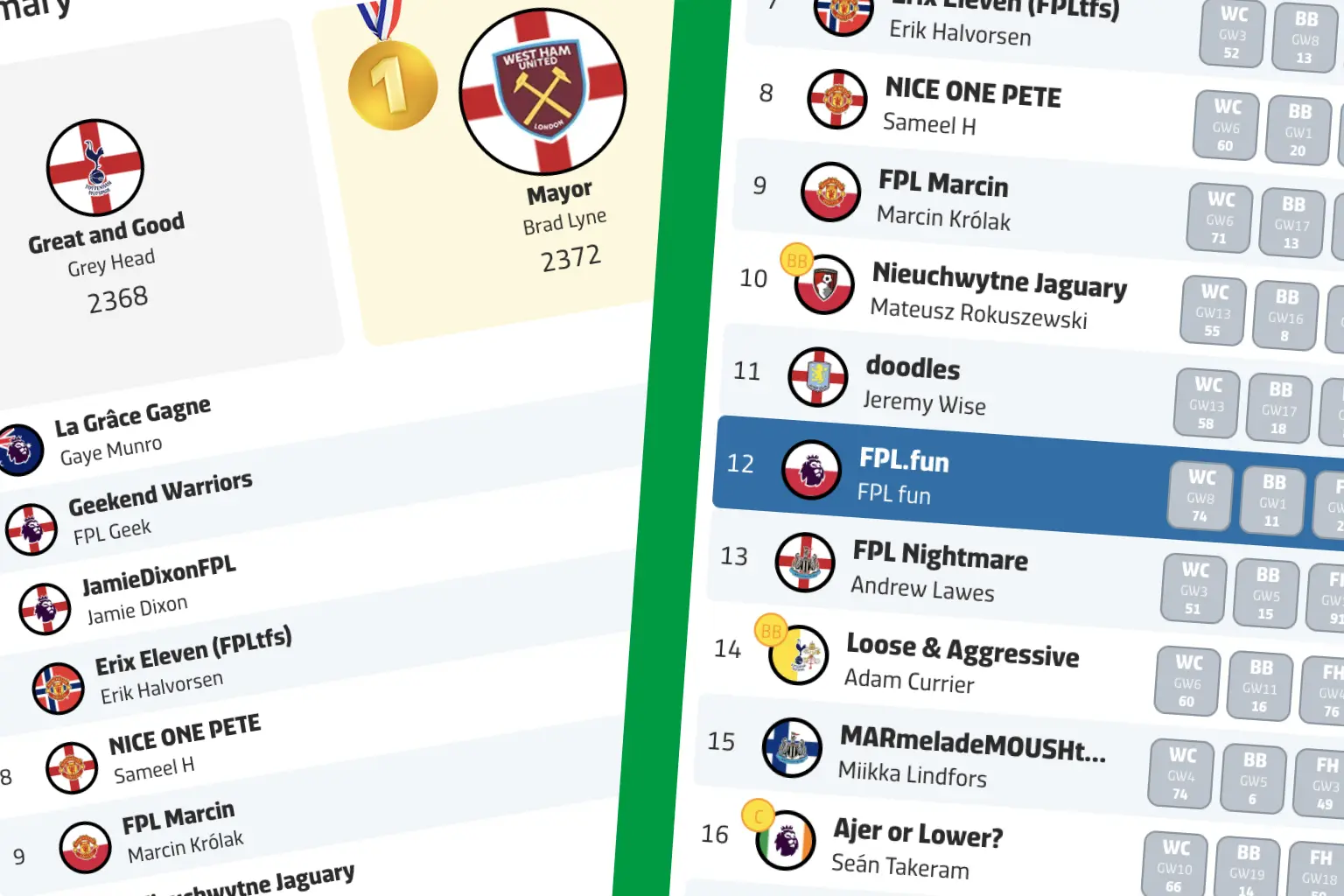
If your mini-league chat goes properly feral on a Saturday at 4.55pm, you already know why the best FPL league side features matter. The standard game gives you the basics, but when captaincies swing, bonus points shuffle, and someone’s bench suddenly gets dragged on by an auto-sub, basic stops being enough fast.
What most managers actually want is simple. They want to know who is top right now, why they are top, whether that lead is real or hanging by a clean-sheet thread, and which rival has somehow lucked into 14 points from a third defender nobody else considered. That is where a proper league-focused side experience earns its place.
What makes the best FPL league side features?
The best tools are not just flashy add-ons. They remove friction. They save you from tapping through six rival teams, doing mental maths on live bonus, and trying to remember whether your mate captained Salah or just claims he meant to.
A strong league side feature set should do two jobs at once. First, it should give you usable live information quickly. Second, it should make the mini-league feel more alive. That balance matters because FPL is not only about optimisation. It is also about bragging rights, chaos, receipts and the weekly joy of spotting a rival disaster before they do.
Live standings are non-negotiable
If a league platform cannot show live standings clearly, everything else is window dressing. The whole point of checking in during matches is to see movement as it happens. Not tomorrow. Not after the final whistle. Right now.
A good live table should update points fast enough to match the mood of the matches. You want to see rank changes after goals, clean-sheet wipes, captain hauls and late cameos. More importantly, you want those swings in league context. A manager gaining 12 points means something very different when they jump from eighth to third than when they stay second and merely tighten the gap.
This is where many tools fall short. They show points, but not the story. The best ones make league movement obvious, so you can see who is rising, who is clinging on, and who has just had their gameweek turned inside out by a 91st-minute goal.
Rival team visibility saves loads of faff
Every serious mini-league has at least one manager you track more closely than your own blood pressure. Usually two. Sometimes the whole lot if it is a work league and nobody is normal about it.
That is why rival visibility is one of the best FPL league side features in practice, not just in theory. You should be able to see key players, captain picks, chips in play, and major differentials without drilling endlessly into separate pages.
The real value here is speed. During live matches, attention spans are short and emotions are high. You do not want to piece together your rival’s week like a detective drama. You want to know immediately whether their green arrow is powered by a captain everyone owns or by an outrageous punt you now have to respect.
There is a trade-off, of course. Too much detail can become noisy, especially for more casual managers. The sweet spot is a clean view that highlights what actually changes league outcomes - captaincy, ownership overlaps, bench points, and live returns.
Live bonus points change the mood completely
Few things in FPL are more annoying than thinking you have won the week, only for bonus points to sneak in later and ruin the moment. Bonus matters because it often decides head-to-head bragging, cup ties, close weekly scores and mini-league positions.
Live bonus tracking belongs near the top of any list of best FPL league side features because it adds context to every match. A player sitting on one goal is interesting. A player on one goal and trending towards three bonus is a genuine problem.
The best implementations make this easy to follow without turning the screen into a spreadsheet. You want a quick read on who is currently in the bonus places and how fragile that is. One yellow card, one missed big chance, one extra save - suddenly the points picture shifts again.
For engaged managers, this is gold. For casual ones, it still helps because it explains why totals are moving and keeps everyone in the chat honest.
Auto-sub visibility is an underrated gameweek saver
Auto-subs are where confusion goes to breed. Somebody posts a smug score, another manager says it is wrong, and then everyone spends ten minutes arguing over whether a one-point midfielder cameo has blocked a bench haul.
A league tool that shows likely or confirmed substitutions clearly is doing serious work. It turns a messy bit of FPL admin into something instantly readable. If a starter has not played, and a bench player is due on, that should be visible in seconds.
This matters even more late in the gameweek when rankings are tight. A single auto-sub can flip weekly prizes, push someone into the top three, or rescue a manager who has spent all weekend moaning about team leaks and rotation.
It is not the sexiest feature, but it is one of the most useful. The best side features are often the ones that stop confusion rather than create excitement.
Weekly awards keep the league alive between big scores
Not every manager is fighting for first. Some are chasing mates, avoiding embarrassment, or simply trying to recover from a truly cursed wildcard. Weekly awards give everyone something to talk about, even when the title race looks done.
This is where utility meets fun. Awards for top scorer, biggest benching disaster, highest captain haul or cheekiest differential hit add personality to the league. They give quieter gameweeks a storyline and make the app feel built around people, not just points.
Done badly, awards can feel gimmicky. Done well, they create the sort of content that gets screenshotted into group chats immediately. That matters because mini-leagues run on social energy. If a feature gives your group more banter, more receipts and more reasons to check in, it is pulling its weight.
Deep league stats should answer real questions
Stats are brilliant until they become clutter. Nobody needs fifty charts if none of them help explain what is going on in the league.
The best FPL league side features include deeper stats, but only the useful kind. Things like most captained players, biggest rank climbs, highest average score, chip usage, and form across the last few gameweeks tell an actual story. They help managers understand whether the table reflects skill, luck, timing, or one suspiciously well-timed Triple Captain.
There is a clear split in audience here. Some managers want every edge and will happily pore over trends. Others just want a quick headline. The ideal setup handles both by keeping stats accessible but not overwhelming. Good design does a lot of the heavy lifting.
For league admins in particular, these extras are valuable because they give the whole competition texture. A mini-league with history, patterns and record-chasing moments is far stickier than one that exists as a weekly points list and nothing more.
Shareable visuals are not fluff
This is the bit some people dismiss until they see their league table turned into something worth posting. Then suddenly it clicks.
Shareable visuals - especially moving league charts, weekly graphics and ranking snapshots - make the league feel like an event rather than a spreadsheet. They are not just pretty. They are social proof, conversation starters and retention tools all in one.
A bar chart race showing who led in August, who collapsed in December and who made a late charge in spring is the kind of thing groups actually share. It gives the season shape. It turns long-term performance into a story everyone can relive, mock and celebrate.
That matters because fantasy football is communal. The best products do not only serve the person tapping the app. They create moments for the whole league. FPL.fun leans into that well because it treats mini-leagues as living groups, not just data sets.
The best feature set depends on your league
There is no single perfect setup for every mini-league. A highly competitive money league will care more about live ranks, bonus swings and rival analysis. A mates league might get more value from awards, visual recaps and quick-glance standings that keep everyone involved even after a bad month.
Still, the strongest platforms usually share the same foundations. They make live information clearer, rivalry easier to track, and the league more entertaining to follow across the whole season. That combination is the point.
If you are judging what counts among the best FPL league side features, ask a blunt question: does this help me understand my mini-league faster, and does it make me want to check back again? If the answer is yes to both, it is not an extra. It is part of the proper FPL experience.
The best mini-leagues are never just tables. They are running jokes, grudges, comeback arcs and screenshots waiting to happen - and the right features make sure you do not miss any of it.