FPLfun App vs Official FPL App: Which Wins?
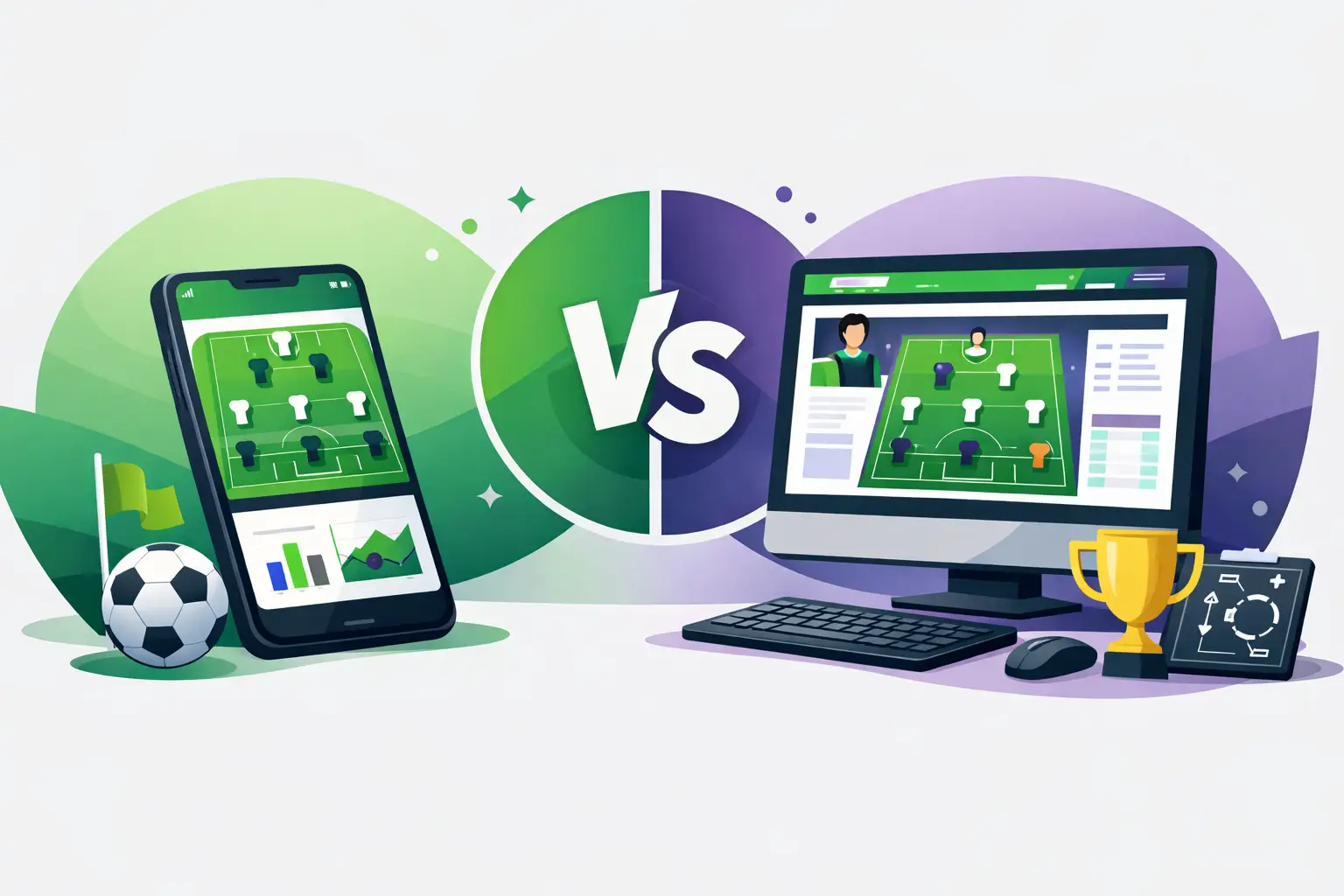
Saturday, 2:58pm. One mate is asking who has captained Haaland, another is claiming he has somehow jumped three places, and the official table still feels half a beat behind the chaos. That is where the fpl app vs official site debate gets real - not in theory, but in the middle of a matchday when your mini-league chat is going off.
For most managers, this is not really about picking a winner in some abstract product battle. It is about what you actually need from FPL when matches are live, rivals are moving, and every point feels personal. The official game gives you the core experience. An app built around league tracking can give you the version people wish they had on a busy weekend.
FPL app vs official site on matchdays
The official site is still the source of truth for your team, transfers, chips and deadlines. That part matters. If you want to confirm your starting XI, check rules, make a transfer or activate a chip, the official platform is where the serious admin happens.
But matchdays are a different beast. Once the football starts, most people are not sitting there to admire clean navigation or read rule pages. They want to know who is rising, who is falling, whether a rival's vice-captain is about to punish them, and whether those bonus points are about to swing the whole table.
That is where the gap opens up.
The official site can feel built around your team first and your league second. If all you care about is your own score, that may be enough. If you are in a competitive mini-league, though, the friction starts showing quickly. You end up tapping through rival teams, checking captains one by one, waiting for rank movements to settle, and piecing the story together yourself.
A dedicated FPL app experience tends to flip that around. It treats the league as the main event. Instead of asking you to do detective work, it puts live standings, player impact and rival context in front of you straight away.
Where the official site still does the job well
To be fair, the official site is not bad. It is essential. It handles team management, official scoring, player prices, game rules and account control. It is the place every manager needs, whether they are a casual player or the one sending expected minutes charts into the group chat at midnight.
It is also familiar. Most FPL managers know where things are, even if they occasionally mutter at the interface. There is comfort in that. If you have played for years, muscle memory counts for a lot.
And for basic checking, it works. You can see your points, inspect fixtures and eventually get your updated standings. If your mini-league is low-key and nobody really cares until Monday morning, the official site may be perfectly fine.
The trade-off is speed of understanding. You can access the information, but it often takes more taps, more waiting and more mental assembly than people want when six matches are on at once.
Why many managers prefer an app-first experience
Mobile habits matter here. Most people following FPL during matches are not sat at a desktop refreshing multiple tabs. They are on the sofa, in the pub, on a train, or pretending to listen during family lunch while checking if a defender has held onto a clean sheet.
That is why the app experience matters so much. A good app is not just the same information squeezed onto a smaller screen. It should be quicker to read, easier to scan and better suited to live moments.
In the fpl app vs official site comparison, the best app experiences usually win on immediacy. Live standings are easier to follow. Captaincy is clearer. Bonus point swings are visible before they become old news. Automatic substitutions stop being a nasty surprise at full time because you can see the situation developing.
For mini-leagues, this changes the whole feel of a gameweek. Instead of waiting for the dust to settle, you can actually follow the drama as it happens.
Rival tracking is the real separator
This is the bit that matters most for serious mini-league players. Not serious in the joyless sense - serious in the sense that beating your mates is obviously the point.
The official site lets you inspect rivals, but it can feel like work. You click into one team, back out, click another, try to remember who owns which differential, and then lose track of what changed in the last five minutes.
A league-focused app can turn that into one clear view. You can see live positions, who has which captain, where points are coming from, and who is getting lucky with bench autosubs before they start pretending it was all planned.
That clarity is not just convenient. It makes the game more fun because it gives your league a live narrative. You are no longer waiting for a final number. You are watching momentum.
Bonus points and live swings feel bigger in-app
Every FPL manager knows the pain of celebrating too early. You think you are safe, then the bonus points recalculate and suddenly your rival has crept past you by a single point with the smugness of a man who started a 4.0 defender by accident.
The official site does show bonus point information, but it is not always presented in the most league-friendly way. A stronger app experience makes those swings easier to understand in context. Not just who is on for bonus, but what that means for your mini-league table right now.
That context is everything. Raw data is useful. Relevant data is better.
The hidden issue: entertainment
A lot of FPL tools are useful but a bit dry. The official site is functional, which is fine, but mini-leagues are social by nature. They run on bragging rights, collapses, miracle comebacks and screenshots sent at exactly the right moment.
This is where dedicated companion platforms have an edge. They do not just help you track your league. They make your league feel alive. Weekly awards, historical trends, visual content and shareable standings turn ordinary score updates into actual banter material.
That sounds like a nice extra until you use it. Then you realise it keeps people engaged for longer, especially in leagues where half the group usually loses interest by Gameweek 12.
A strong example is FPL.fun, which leans hard into the mini-league side of the game rather than treating it like an afterthought. The appeal is not just more data. It is having your whole league story in one place - live standings, rival analysis, bonus point tracking, automatic subs, stats and visuals worth sharing in the group chat.
So which should you use?
The honest answer is both, but for different jobs.
Use the official site for managing your team. That is still the home base. It is where transfers happen, chips get played and official information lives. No serious FPL manager is replacing that entirely.
Use an app-first, league-focused experience if you care about what is happening around you. If your mini-league has stakes, history, grudges or even just one friend who never stops talking when they are top, the official site alone often feels too slow and too individual.
If you are a casual manager who checks scores after the final whistle, the official site may be enough. If you want to follow live ranks, understand your rivals instantly and actually enjoy the social side of FPL while matches are on, an app built for mini-leagues is the better fit.
That is the real answer to fpl app vs official site. It is not about replacing the official platform. It is about fixing the parts it does not prioritise.
What to look for in an FPL app
Not every companion app is worth your time. The good ones save clicks and add context. The bad ones just repackage information you already had.
Look for live league standings that update fast, clear captain and vice-captain visibility, automatic substitution tracking, bonus point context and easy rival comparison. If it also gives you weekly awards, deeper league stats and visuals you would actually share, even better. Those features are not fluff when your whole goal is making the mini-league more competitive and more entertaining.
Most importantly, it should reduce friction. You should open it and know what is happening immediately. No hunting. No guesswork. No twenty-tab detective mission because Dave somehow has 14 points from a player you forgot existed.
The best FPL experience usually is not official site or app. It is official site for control, and a proper league companion for everything that makes matchday fun. If your mini-league means anything to you, that split starts to feel less like a luxury and more like common sense.