FPL Bench Order: How Autosubs Decide, Formation Rules and Bench Boost

Yes, bench order matters: FPL uses your bench in the order you set it, bench 1 then bench 2 then bench 3, for eligible outfield subs. Formation rules can skip a player out of turn, and your reserve goalkeeper only swaps in for a non-playing starting keeper. Bench Boost changes everything, because then all four bench scores count regardless of order.
TL;DR:
- Your bench order affects which substitute players come on first if a starter fails to play, but formation rules can override a higher-priority bench player if it breaks the minimum team requirements.
- Reordering your bench takes seconds but must be saved correctly before the deadline; last-minute changes risk not registering if not saved properly.
- During normal weeks, your safest and most reliable players should be at the top of the bench, while during Bench Boost weeks, all four bench players’ fixtures and starting status matter more than order.
- The reserve goalkeeper typically only comes into play if your starting goalkeeper doesn't feature, so placing a dependable outfield player at bench one is usually more strategic.
- Instant live updates, including auto-substitutions and mini-league standings, are available through certain platforms, helping managers track their bench impact in real time.
Table of Contents
- How automatic substitutions actually get decided
- How to change and save your bench order before the deadline
- Bench order strategy for normal weeks versus chip weeks
- Common mistakes and quick troubleshooting
- How these rules were checked and how to track autosubs live
- Three rules I actually follow every Gameweek
- See your bench impact the moment it happens with FPL.fun
- Official pages and useful reads
- FAQ
How automatic substitutions actually get decided
Here's the bit most managers never quite nail down. When the Gameweek ends, the system checks your starting XI for anyone who didn't play, then works down your bench in order, looking for the first player who both played and keeps your formation legal.
That second condition trips people up constantly. A valid FPL formation always needs one goalkeeper, at least three defenders, at least two midfielders and at least one forward, as confirmed by the official rules on managing your team. Your bench order doesn't override that requirement, it works around it.

Say you're playing a 4-5-1 and your only forward doesn't play. Your bench 1 is a midfielder who did play, but bringing them on would leave you with no forward at all, below the minimum of one. FPL skips straight past that midfielder and brings on the first forward on your bench who played instead.
Two situations play out constantly:
- You start three defenders and one of them doesn't play. Your bench 1 is a midfielder, but subbing them on would drop you to two defenders, so the system skips ahead to the first defender on your bench who played.
- Your bench 1 didn't play either. A benched player who blanked can never come on, whatever the formation, so FPL simply moves on to bench 2, then bench 3, until it finds someone who played and keeps the formation legal.
Pro Tip: Check your final formation on the Pick Team screen before the deadline, not just your bench order, since the two interact more than most managers expect.
How to change and save your bench order before the deadline
Reordering your bench takes seconds, but getting it wrong at 11:29 on a Saturday has ruined more Gameweeks than injuries have.
- Open the Pick Team page from your squad menu.
- Tap or click the player on your bench you want to move.
- Use the Substitute control to swap their position with another bench player.
- Repeat until your bench reads in the priority order you actually want.
- Click Save my team and wait for the confirmation message.
That last step is where people come unstuck, according to the official guidance on the Pick Team controls: changes only stick once you've clicked save, and the deadline doesn't care how confident you felt.
A few checks confirm it's locked in: the bench numbers next to each player should reflect your new order, the page should show no pending changes banner, and refreshing the screen should keep your layout exactly as you left it.
Pro Tip: Sort your bench the night before the deadline rather than in the last five minutes. Nothing wrecks a Gameweek faster than a save that didn't register because your connection dropped at the worst possible moment.
If you'd rather follow along with screenshots, FPL.fun's step-by-step tutorial walks through the same controls visually.
Bench order strategy for normal weeks versus chip weeks
Most Gameweeks, your bench is insurance. You want the player most likely to actually get minutes sitting at bench 1, even if their ceiling is lower than a rotation risk further down. A nailed-on defender who plays 90 minutes and picks up a clean sheet point beats a flashy attacker who might not start.
- Bench 1 should be your safest source of minutes, not your highest ceiling.
- Bench 2 and 3 can lean slightly more speculative once your first slot is secure.
- Your reserve goalkeeper only matters if your starting keeper doesn't play, so don't overthink that slot.
Bench Boost flips the whole logic. Once it's active, the official chip guidance confirms that every point scored by your bench that Gameweek counts towards your total. Left-to-right order stops mattering entirely, because nobody's coming off, everybody's contributing. What matters instead is building a full 15 where all four bench players have good fixtures and are likely to start.
All four bench scores count during an active Bench Boost, turning your bench from a safety net into a scoring source for that single Gameweek, per the chip guidance from the Premier League.
That's where Wildcard comes in. Managers often use a Wildcard a Gameweek or two ahead of a planned Bench Boost specifically to reshuffle their squad depth, according to guidance on chip timing. A typical timeline: wildcard in one week to bring in fifteen players with strong upcoming fixtures, then Bench Boost the following week once those fixtures land.
Common mistakes and quick troubleshooting
Most bench order headaches trace back to the same handful of errors. Catching them early saves a lot of confused messages in your league group chat.
- Reordering the bench but forgetting to click Save my team, so the change never actually applies.
- Expecting a bench player to come on when doing so would break the minimum formation, even though they played.
- Mixing up vice-captain rules with bench substitutions. They're separate systems entirely.
- Not checking after the Gameweek whether your bench players actually got minutes before assuming the autosub logic failed.
If a substitution looks wrong, work backwards through those four points before assuming there's a bug.
How these rules were checked and how to track autosubs live
Every rule in this piece traces back to the official guidance on managing your FPL team and the chip guidance covering Bench Boost, rather than forum folklore or last season's habits.
Working out whether your bench actually paid off can still mean refreshing your squad page like it's 2008, which is the exact problem FPL.fun was built to solve.
- Instant mini-league standings that update as matches happen, rather than after the whole round finishes.
- An automatic substitutions tracker that shows exactly which bench player came on and why, live.
- Bonus points and live alerts so you're not left guessing who scored what.
For the mechanics behind the tracker itself, our automatic substitutions explainer breaks down the timing in more detail, and our tutorial covers the visuals step by step.
Three rules I actually follow every Gameweek
Bench order isn't complicated once you strip away the noise. Three things stick with me: bench 1 should always be your safest source of minutes, formation rules beat bench order every single time, and Bench Boost makes order irrelevant but squad depth essential.
My five-minute routine before every deadline: check who's actually starting for their club, confirm my bench order reflects that, glance at my formation to make sure a sub wouldn't break it, and hit save twice just to be sure.
— Przemek
See your bench impact the moment it happens with FPL.fun
Knowing the rules is one thing. Watching your bench order actually play out across your mini-league, live, is another experience that some platforms aim to provide.
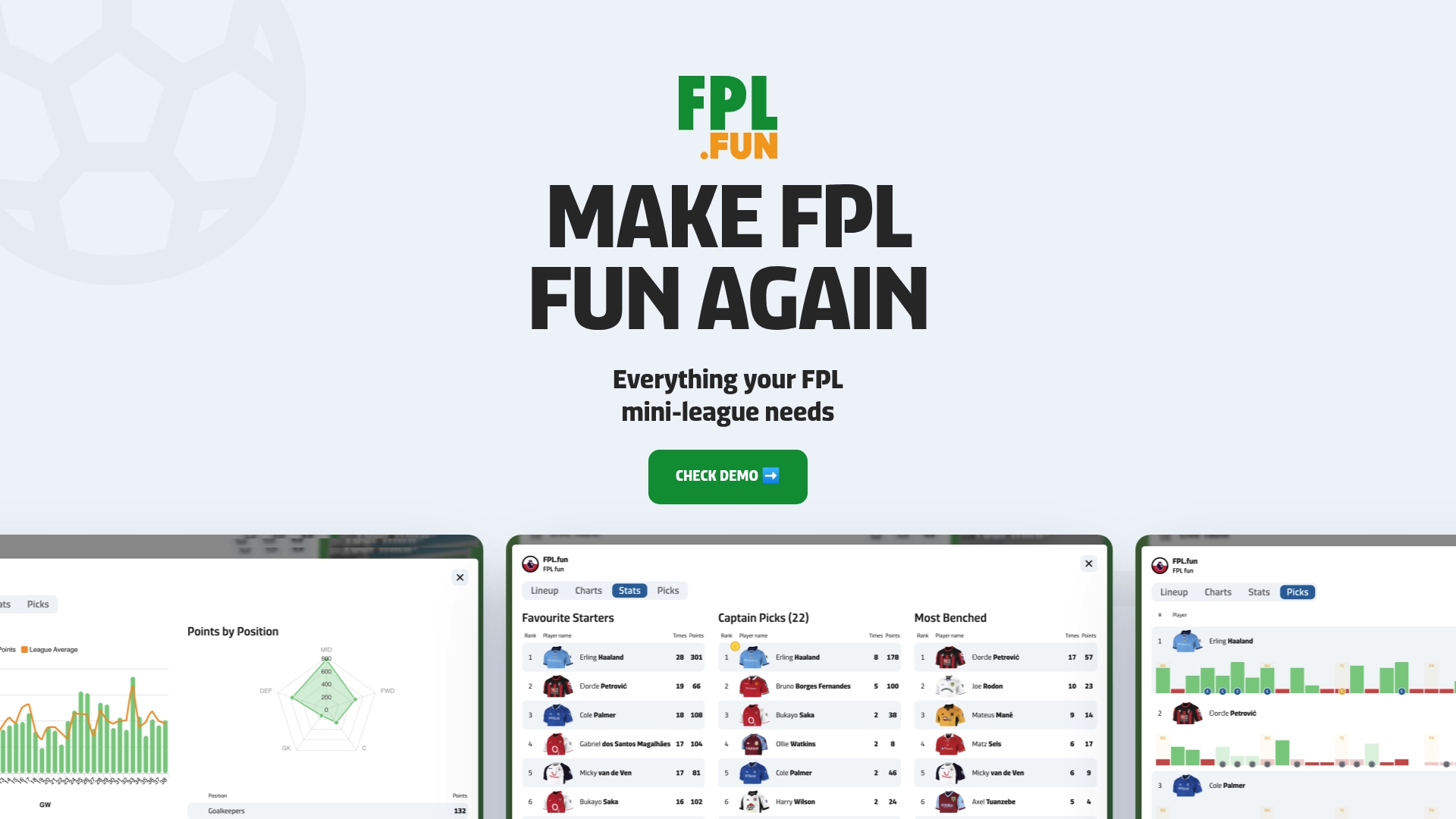
Instead of refreshing multiple tabs after the deadline, some apps offer instant standings and an autosubstitutions tracker to show who came on and its impact on your rank.
- Mini-league standings that update as bonus points and substitutions settle.
- A tracker showing which bench player was subbed on and why.
- Awards and stats designed to enhance league banter.
Check out FPL.fun to see your next Gameweek unfold in real time, or find your league fast with our guide on locating your mini-league ID.
Official pages and useful reads
FAQ
Does the order of your bench matter in FPL?
Yes, bench order determines which eligible substitute comes on first, second and third when a starter doesn't play. Formation rules can still skip your top pick if bringing them on would break the minimum of 1 goalkeeper, 3 defenders, 2 midfielders and 1 forward, as set out in the official Pick Team guidance.
How does FPL decide who comes off the bench?
FPL works down your bench in the order you've set, checking each player for two things: did they play, and would bringing them on keep your formation legal. The official rules confirm the reserve goalkeeper is handled separately and only replaces a starting keeper who didn't play.
What order should I fill positions in fantasy football?
Put your most reliable source of minutes at bench 1, since that's the player most likely to actually be used if a starter blanks. Your reserve goalkeeper slot matters far less day to day, since it only activates when your starting keeper doesn't play at all.
When to bench boost FPL 2026?
There's no fixed calendar date. The smart approach, per official chip guidance, is to build a strong 15 man squad first, often using a Wildcard the Gameweek or two before, so all four bench players have good fixtures and are likely to start when you activate Bench Boost.