FPL Mini Leagues: Keep Rivals Active Past October

Create a private mini-league, pick Classic or Head-to-Head before Gameweek 1, and switch on a dedicated admin tool to keep rivals checking in every week. That single combination decides whether your league fizzles out by November or stays alive until the final whistle. The official FPL settings handle the rules. The rest, standings, banter and prize tracking, is where the real work happens.
TL;DR:
- Classic leagues track cumulative points, while weekly matchup leagues award 3 points for a win and 1 for a draw; League Cup works with either format.
- Start League Cup later in the season and award byes to the highest scorers in the qualifying week to reengage trailing managers.
- Live standings, bonus point estimates, and automatic substitution previews can change before matches are finalized; check the official FPL site when figures conflict.
- Confirm ownership with an outside tool by placing a unique code in your team or league name, and never share your password.
- Weekly low stakes awards and midmatch updates keep members involved better than relying on one end of season prize.
Table of Contents
- How to create and invite members to a private mini-league
- Classic versus Head-to-Head, and how League Cup fits in
- Monthly admin checklist for mini-league managers
- Tactics that keep a mini-league competitive all season
- Why a dedicated mini-league platform takes the admin load off you
- Keeping members engaged through a long season
- Tools and admin platforms built for live standings and prize tracking
- How real-time stats and auto-subs actually work
- Customising weekly awards and insight features
- Handling transfers and substitutions within your league
- Troubleshooting common mini-league issues
- Building camaraderie without the toxicity
- Reading bonus points and rank changes in real time
- Why small, frequent interactions beat big prizes
- Try FPL.fun and bring your mini-league back to life
- FAQ
How to create and invite members to a private mini-league
Setting up a league takes five minutes inside the official FPL app, but a few small decisions here shape the whole season.
- Open your FPL account and head to Leagues & Cups, then select Create a league or cup.
- Choose Classic or Head-to-Head (more on which suits your group below).
- Name the league something your group will actually recognise in a crowded leagues tab.
- Pick your scoring start: Gameweek 1 for a full season, or a later Gameweek such as 6 if you want to create new mini-leagues to refresh FPL rivalries partway through.
- Generate the invite code and share it in your group chat.
Each manager can join up to 30 private mini-leagues, so there's no harm running a main league alongside a monthly side bet. Double-check every invited friend has actually joined before Gameweek 1 locks, since late joiners can still enter but won't appear in early standings until they do.
Classic versus Head-to-Head, and how League Cup fits in
The format you choose on day one does more to shape engagement than any prize ever will.
- Classic leagues rank everyone on cumulative points across the season, which suits groups happy to chase one long table and crown a single champion in May.
- Head-to-Head leagues pit managers against each other each week, awarding 3 points for a win and 1 for a draw, so even someone near the bottom of the Classic table can still win their fixture and stay interested.
- League Cup is a knockout you can switch on inside either format, and it's one of the most effective tools for keeping stragglers invested because it gives everyone a fresh shot regardless of their overall rank.
- Cup scheduling and byes are calculated automatically from your league size, so a bigger group simply means more knockout rounds after the single qualifying Gameweek.
If your group tends to lose interest once the table settles by October, Head-to-Head solves that by resetting the stakes every single Gameweek.
Monthly admin checklist for mini-league managers
A few minutes each month keeps the league running smoothly and keeps disputes to a minimum.
- Check Admin > League Options to confirm start Gameweek, league type and whether League Cup is switched on.
- Review new join requests and confirm invite codes haven't leaked into the wrong group chat.
- Remove genuinely inactive managers only after checking with them directly, since silence doesn't always mean they've quit.
- Keep a visible record of who owes what for any prize pot, updated after each milestone rather than left until May.
- Never ask a member for their FPL password to prove admin status. A unique verification code placed in a team or league name is the standard way to confirm ownership to any third-party tool.
Pro Tip: Post the prize ledger somewhere everyone can see it, even a pinned message in the group chat, so nobody has to ask awkwardly who's behind on paying up.
Tactics that keep a mini-league competitive all season
Most leagues don't die from lack of interest in football. They die from lack of reasons to check in once the table's decided.
- Run a Head-to-Head bracket alongside your Classic league, or reset a monthly Classic mini-league so last month's stragglers start fresh.
- Time your League Cup to begin later in the season. Scheduling it to start when it still matters reliably pulls back in members who've fallen out of overall contention.
- Allocate qualifying byes fairly, since the highest scorers in the qualifying week typically earn them, and that transparency matters when bragging rights are on the line.
- Share live standings mid-Gameweek rather than waiting for the Monday final table, so the chat stays busy while matches are still being played.
- Run a quick captain-of-the-week poll before deadline, and hand out a small, silly award each week rather than saving everything for one big end-of-season prize.
None of this needs a spreadsheet genius running the show. It needs someone willing to post updates and keep the banter flowing, which is exactly the gap a dedicated mini-league onboarding guide is built to close.
Why a dedicated mini-league platform takes the admin load off you
Running a league well on spreadsheets and screenshots is possible. Running it well without losing a Saturday afternoon to refreshing the FPL site is a different problem, and it's the one we built FPL.fun to solve.
- Live standings update as goals go in, rather than waiting for Monday's official recalculation.
- Auto-subs and bonus points show in real time, so you can see your actual rank mid-match instead of guessing.
- Prize ledgers track who's owed what automatically, removing the "I definitely paid you" arguments.
- Onboarding flows let new members join and see the league history instantly, with no manual catch-up required.
Head-to-Head leagues keep managers engaged by giving everyone a weekly match they can still win, which is exactly why the format exists in the first place: it turns a season-long slog into 38 separate, winnable contests.
Getting started takes three steps: verify your league using a code in your team name, switch on live features, and send your members a link to join. From there, the live standings do the heavy lifting every Gameweek, and you spend your time on banter instead of bookkeeping.
Keeping members engaged through a long season
The managers who disappear by Christmas usually aren't bored of football. They're bored of a league that only tells them their rank once a week, on a Monday, when the result is already old news.
Head-to-Head format helps here by design, since every manager has a live fixture worth following regardless of their overall position. Pair that with a monthly Classic reset, a shorter mini-league that starts fresh every four weeks, and even your bottom-half regulars have something to chase. Small, regular awards work better for retention than one enormous prize at the end: a weekly "worst captain pick" or "most points left on the bench" keeps the group chat alive even in a quiet Gameweek. Save the big prize for May, but don't make it the only reason anyone's still paying attention in October.

Tools and admin platforms built for live standings and prize tracking
The official FPL app handles league creation, scoring rules and the League Cup bracket. What it doesn't do is live, between-match standings, automated prize tracking or onboarding flows for new joiners, and that gap is where a dedicated admin tool earns its keep.
We built FPL.fun around exactly that gap: live standings that update mid-match, auto-sub tracking, bonus point previews and a prize ledger that updates itself rather than relying on someone's memory. New members get a proper onboarding view with league history, rather than joining blind and asking "wait, what's the score so far?" in the group chat. If you're weighing up different platform styles for your group, our platform comparison for mini-league fans walks through the options.
How real-time stats and auto-subs actually work
During a live Gameweek, provisional bonus points and automatic substitutions aren't locked in until the match officially finalises, which is why your rank can shift after full time as the data settles. A live mini-league tool pulls provisional data as matches are played, estimating bonus points from live match stats and flagging likely auto-subs before the official site confirms them.

That matters because a manager sitting third at half-time might actually be bottom once bonus points land, and seeing that shift happen live is far more engaging than finding out on Monday morning. Our live standings page shows exactly this: provisional ranks, projected bonus points and auto-sub previews updating as goals, cards and final whistles come in across the weekend.
Customising weekly awards and insight features
Weekly awards are the easiest, cheapest way to keep a mini-league interesting, and they work best when they're a bit daft rather than purely competitive. A "captain disaster of the week" or "most points left on the bench" award gives every member, even the ones near the bottom, a reason to check the final table.
We've built a set of these into FPL.fun by default, alongside insight features like cumulative statistics, captain pick history and squad value tracking across the season, so admins don't have to build any of it manually. Our guide to improving mini-league fun has more ideas on running awards your group will actually look forward to each week.
Handling transfers and substitutions within your league
Transfers and substitutions happen at the individual squad level, not the league level, so there's nothing for an admin to configure here beyond the league's scoring format. What changes is how visible those decisions are to the rest of the group. In a Head-to-Head league, a bold transfer or a correct bench call can swing a single fixture, which makes those decisions worth discussing openly in the group chat rather than quietly in private.
A live tool that shows auto-subs and transfer impact as they happen gives your league something concrete to react to mid-Gameweek, rather than everyone finding out who benched a big haul after the fact.
Troubleshooting common mini-league issues
Most mini-league problems come down to syncing delays rather than genuine errors. If your standings look wrong, check the official FPL site first since that's the source of truth, and remember that bonus points and auto-subs often aren't finalised until well after the last match of the Gameweek ends.
If a member can't find your league, double-check the invite code hasn't expired or been mistyped, and confirm they're searching under the right league name. If a third-party tool shows a mismatch, re-verify ownership using your unique code in the team name field rather than sharing login details, and give the tool a few minutes to resync after a chaotic bonus points reshuffle. Patience usually fixes more than troubleshooting does here.
Building camaraderie without the toxicity
The leagues that last are the ones where losing is funny, not just frustrating. That usually comes down to tone rather than rules: a group chat that roasts bad captain picks in good humour tends to retain members far longer than one that goes silent after a bad week.
Keep prize stakes modest and transparent, so nobody feels like they're genuinely out of pocket over a fantasy football result. Rotate who gets the weekly award spotlight rather than letting the same person win every "worst transfer" gag, and make sure new joiners get brought up to speed on league history and inside jokes rather than left to figure it out alone.
Reading bonus points and rank changes in real time
Bonus points are awarded using the Bonus Points System based on in-match statistics, but they aren't confirmed until a match is finalised, which is why your live rank and your Monday rank can differ. Checking live, provisional figures during matches gives you a rough sense of who's leading, but treat anything shown before full time as an estimate rather than the final word.
A dedicated live standings view updates these provisional figures continuously through the Gameweek, so you can watch your rank shift as bonus points and auto-subs settle, rather than refreshing the official site and waiting for Monday's confirmation.
Why small, frequent interactions beat big prizes
The leagues I've watched thrive aren't the ones with the biggest prize pot. They're the ones where someone posts an update mid-match and the group chat actually responds. Frequent, low-stakes interaction keeps a league alive far longer than one big payout in May ever does.
If your league's gone quiet, don't wait for next season. Schedule a mid-season reset or switch on League Cup now and watch interest come straight back.
— Przemek
Try FPL.fun and bring your mini-league back to life
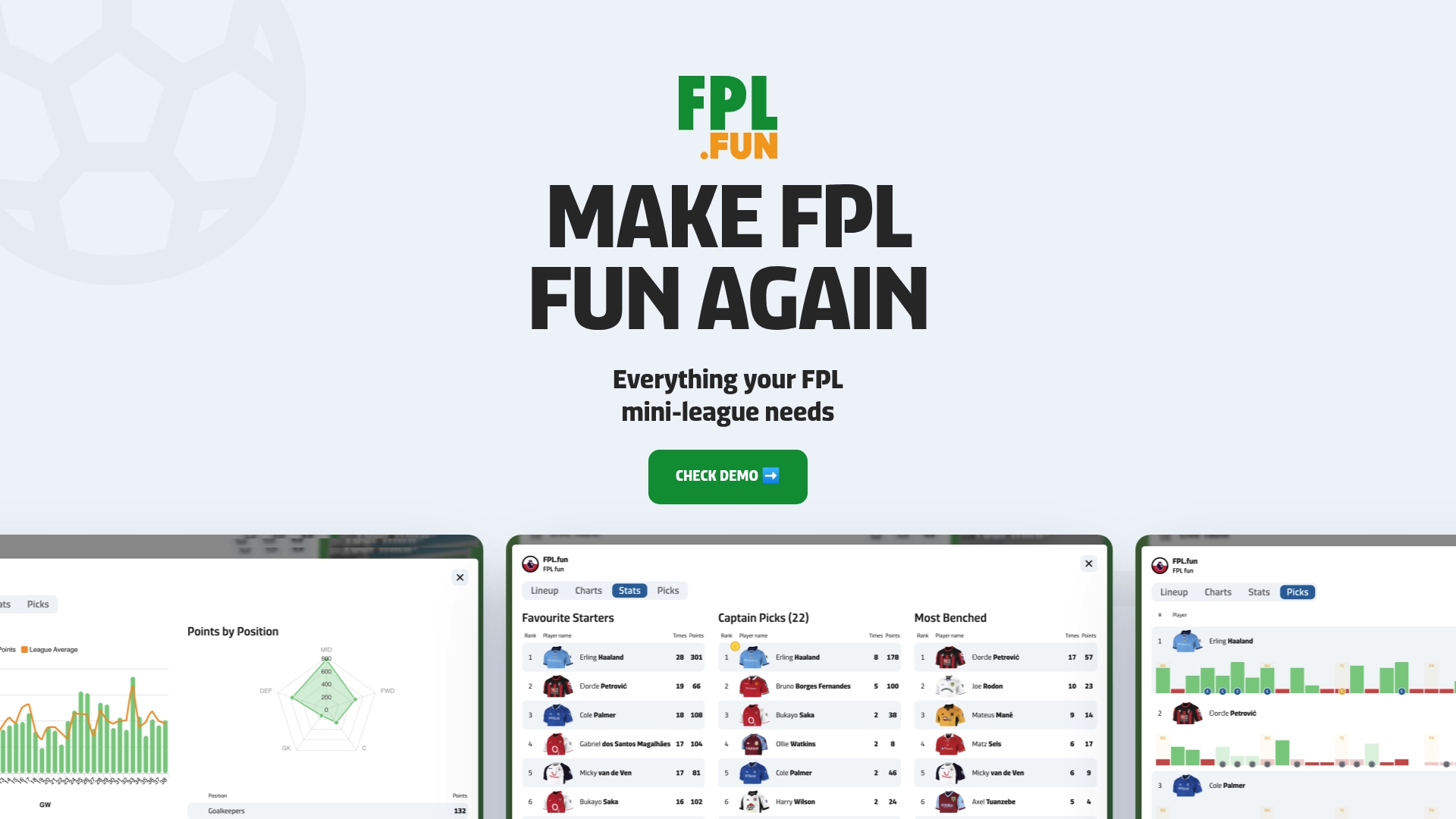
We built FPL.fun because refreshing the official site mid-match, every single week, got old fast. Import your existing league, verify it with a quick code, and see live standings, bonus points and auto-subs update as matches happen instead of waiting for Monday.
- Start with a free trial and connect your league in minutes.
- Unlock full league history and prize tracking with League Access or Individual Access, from £5.50 a month.
- Head to the FPL.fun app to get your league set up before the next deadline.
FAQ
How do I create a private FPL mini-league?
Open Leagues & Cups in your FPL account, select Create a league or cup, choose Classic or Head-to-Head, name your league and generate an invite code to share with friends. You can start scoring from Gameweek 1 or a later Gameweek if you want a fresh reset.
What's the difference between Classic and Head-to-Head leagues?
Classic leagues rank everyone by cumulative points across the season, while Head-to-Head leagues pit managers against each other weekly, awarding 3 points for a win and 1 for a draw. Head-to-Head tends to keep more managers interested since every Gameweek is a fresh, winnable fixture.
How does League Cup scheduling work?
League Cup is a knockout that admins can switch on inside either league format, with the starting round and qualifying byes calculated automatically from league size. Byes typically go to the highest scorers in a specified qualifying week, and starting it later in the season helps re-engage members outside the main title race.
How many mini-leagues can one manager join?
Each FPL manager can be a member of up to 30 private mini-leagues at once. That leaves plenty of room for a main season-long league alongside shorter monthly or Head-to-Head side leagues.
How much does FPL.fun cost?
FPL.fun offers Individual Access from £5.50 a month or £48 a year, and League Access from £7 a month or £58 a year, with a free trial to start. Pricing and full plan details are available on the official pricing page.