Protect points from FPL price changes: official Predictor and live tips

Player prices move overnight, driven by net transfers rather than points scored, usually in £0.1m steps and capped around £0.3m per Gameweek. The single smart habit is checking the official Price Change Predictor before you hit confirm on any transfer. Chase points first. The pennies will sort themselves out.
TL;DR:
- Price movements are driven by net transfers, so a player can rise despite mediocre performance if there is strong buying interest.
- Price increases are capped around £0.3m per Gameweek, with only £0.1m profit realized for every £0.2m a player rises, affecting actual team value gains.
- The Price Change Predictor updates every 15 minutes, but official changes typically occur near midnight UK time, so managers should check before the deadline rather than rely on real-time updates.
- Chasing price rises without points benefit can harm your team’s expected points, so only early transfers should be made for genuine improvements or safe, low-risk swaps.
- Using a focused watchlist, monitoring overnight transfer lists, and confirming market sentiment through community trackers can help managers make informed decisions without overreacting.
Table of Contents
- How FPL price changes actually get decided
- When prices update and what it means for your bank
- Reading the official Price Change Predictor properly
- Should you chase the rise, or protect your points?
- Setting up a watchlist that actually works
- What price changes are actually for
- Track prices, but track your league even harder
- Where to check the facts yourself
- Sources
- FAQ
How FPL price changes actually get decided
Forget the idea that a hat trick automatically bumps a player's price. It doesn't. Price changes are driven by net transfers, meaning the balance of people buying a player minus the people selling him, not his underlying performance.
That's why a mediocre midfielder can rise on the back of one good fixture while a genuinely brilliant player stagnates because nobody's biting yet. Popularity moves faster than merit, at least in the short term.
The Premier League's own guidance confirms the mechanism is transfer market activity, but it deliberately keeps the exact thresholds hidden. Nobody outside the game's internal systems knows precisely how many net transfers trigger a move for any given player, and that's by design, to stop managers gaming it too precisely.
What you can see is progress:
- A percentage showing how close a player is to a rise or fall
- Whether that percentage is climbing or stalling as the day goes on
- The gap between short-term hype and a player who's building genuine long-term value through consistent returns
Pro Tip: A player rising in price after one big haul is often riding a wave of knee-jerk transfers. Wait a day or two before joining in, unless the fixtures genuinely justify it.
When prices update and what it means for your bank
Timing matters more than most managers realise. Officially, the Predictor tracks progress toward a change that lands at midnight UK time, and historically, community trackers have logged the actual database update landing closer to 2:30am BST. Either way, you wake up to a fait accompli.
The mechanics themselves are simple:
- Each visible daily move is £0.1m
- A player can shift by up to £0.3m across a single Gameweek, according to official Premier League figures
- Falls are realised in full the moment they happen
Here's the part that trips people up: resale profit isn't 1 to 1. You only bank £0.1m of profit for every £0.2m a player rises while you own him. Buy at £5.0m, watch him climb to £5.2m, and you'll only be able to sell for £5.1m. Falls don't work that way. They hit your resale value in full, immediately.
This asymmetry is exactly why your team value can drift below what the raw price rises suggest, even when most of your squad has gone up.

Reading the official Price Change Predictor properly
The Predictor sits within the official Fantasy Premier League site and refreshes every 15 minutes, showing a progress percentage plus a calibrated prediction and a coloured likelihood label like "likely to rise." It's the closest thing to an inside track that exists, and it's free.
Here's how to actually use it without overreacting to every flicker:
- Filter the view to your current squad and your watchlist, not the entire player pool
- Sort by "likely to rise" if you're deciding whether to move early on a transfer target
- Treat anything above 100% as a strong signal, not a certainty
- Check again close to the deadline, because the final quarter-hour can swing things
That last point matters more than people give it credit for. The Premier League itself flags that the Predictor is an indication, not a guarantee.
Pro Tip: Don't make a transfer purely because a player is "very likely to rise" tonight. If the points case isn't there too, you're paying a transfer for a cash gain worth less than you think.
Should you chase the rise, or protect your points?
Here's the uncomfortable truth: most managers who chase price rises end up worse off than if they'd just left their team alone. The Premier League's own explainer is blunt about it, warning that transfers made purely to grab a £0.1m rise can actively harm your points total if the incoming player isn't actually better for your side.
So here's a rule of thumb worth sticking to:
- Only make an early transfer if it improves your expected points or it's a genuinely low-risk swap between similar options
- Skip it if you'd need to take a hit, or if it means benching a player who's outscoring the new arrival
- Treat price rises on your own players as a bonus, not a target
Where this gets interesting is chip strategy. A Wildcard isn't just for fixing a shaky midfield, it's a tool for building team value deliberately. Rather than nudging your squad by £0.1m increments week after week, a well timed Wildcard lets you load up on several risers in one move, converting anticipated price growth into actual bank balance across your whole squad rather than one player at a time.
That's a very different mindset from reflexively swapping a player the night before a predicted rise. One is team value management. The other is often just noise.
Setting up a watchlist that actually works
A watchlist only earns its place if you check it with purpose, not out of anxiety. Here's a sensible daily routine:
- Add five to ten transfer targets to your watchlist rather than tracking the entire player pool
- Check the official progress percentage for each once, ideally mid-evening rather than every hour
- Note any sudden spike in net transfers, since a sharp overnight swing often signals genuine consensus forming, not just noise
- Cross-check against a community tracker for extra context, but treat the official Predictor as the final word
- Leave the final 15 minutes before deadline alone unless the points case is airtight
Overnight risers and fallers get published every morning, alongside the most-transferred players for that Gameweek, which the Premier League posts as a public list. Scanning that list once a day tells you far more about market sentiment than refreshing your squad screen forty times.
What price changes are actually for
Price changes are a market signal, not a scoreboard. They tell you where the crowd is moving, not who's going to win you your Gameweek. I'd argue too many managers treat their team value like a second competition running alongside the real one, and that's backwards.
Live tools like FPL fun's instant standings help here because they show you rank and bonus points as they land, which keeps your attention on points, where it belongs, rather than obsessively refreshing a price tracker. Don't let penny-chasing wreck a fixture plan that was working just fine.
— Przemek
Track prices, but track your league even harder
Price changes are worth watching. Your mini-league is worth living in. FPL fun offers instant standings, real-time bonus points and automatic substitutions updating as matches happen, providing a more dynamic mini-league experience.
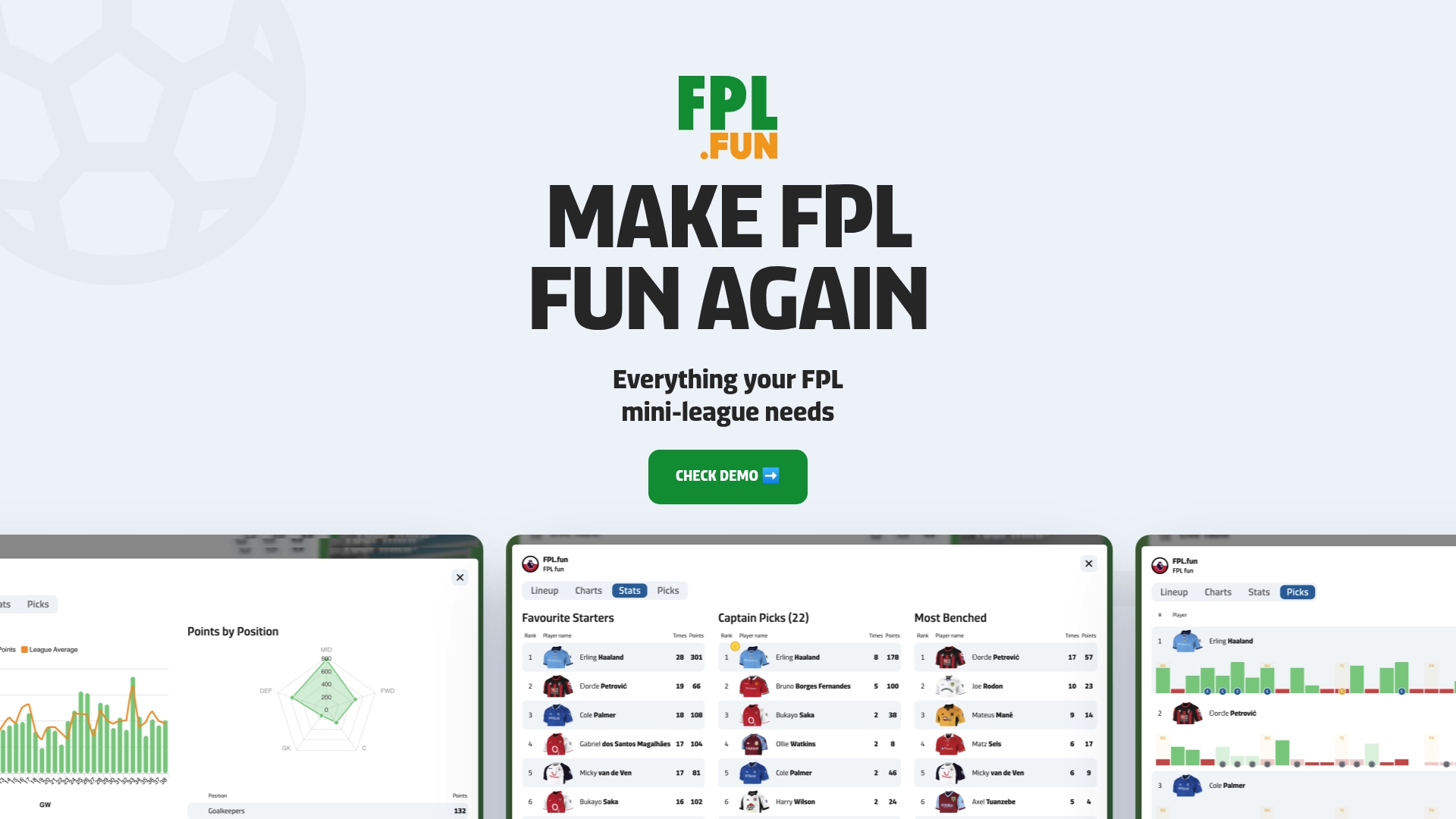
While you're keeping half an eye on the Price Change Predictor, FPL fun handles the other half of the fun bit, quirky weekly awards, rival insights, and a running history of your league that the official site simply doesn't keep. If you manage a mini-league and want your group actually engaged rather than checking in once a Gameweek, League Access starts at £7 a month or £58 a year. Individual managers who just want the live stats without admin duties can grab Individual Access from £5.5 a month or £48 a year. Head to FPL fun and set your league up before the next deadline.
Where to check the facts yourself
- What's new in 2026/27 Fantasy: Price Change Predictor, the official rundown of how the tool works
- Risers, fallers and top transfers, the daily overnight list published by the league
- FPL Dashboard's price change guide, a community tracker worth cross-checking for context
Sources
- What’s new in 2026/27 Fantasy: Price Change Predictor — Premier League
- FPL player price changes: how, why and when does it happen? — Premier League
- FPL player price changes - risers, fallers and top transfers for Gameweek 6 — Premier League
- How FPL Price changes work | FPL Dashboard
FAQ
What time do FPL price changes happen?
Official guidance points to changes landing around midnight UK time, though historically the database update has often shown up closer to 2:30am BST. The safest habit is checking the Price Change Predictor before the deadline rather than waiting up for the change itself.
Did FPL prices go up for the players I'm tracking?
Check the overnight risers and fallers list the Premier League publishes each morning, which names every player who moved and by how much. It also lists the most-transferred players, which helps explain why a move happened.
How do price changes work in FPL?
Prices move based on net transfers, the balance of people buying versus selling a player, not directly on points scored. Moves typically happen in £0.1m steps daily, with a cap of roughly £0.3m across a single Gameweek.
If my player's price rises, do I get the full profit when I sell?
No. You only realise £0.1m of profit for every £0.2m the price rises while you own the player, so gains are effectively halved. Price falls, by contrast, are realised in full straight away.
Is the Price Change Predictor always accurate?
Late transfer swings in the final minutes before deadline can still pull a player back under the threshold.