1.39M Managers Waited: Triple Captain Strategy, Checklist for UK FPL

Save it. Almost always, wait for a double gameweek and drop your Triple Captain on a nailed premium attacker with two fixtures, not one. The only real exception is an elite single-week matchup with zero rotation risk, think Erling Haaland at home to a promoted side, or Bruno Fernandes against a leaky defence. Everything else in this guide is really just working out whether your situation fits that exception.
TL;DR:
- Double gameweeks, particularly Gameweek 36, see the highest number of Triple Captain activations, often over 1.39 million, as managers prefer two fixtures for safer returns.
- Early Triple Captains are justified only if the player is guaranteed to start, handles penalties, faces a favorable fixture, and owner and ceiling metrics support a high upside.
- Triggering the chip on a single fixture carries high risk without a clear-cut, no-rotation scenario, especially if team news or fixture quality could shift last-minute.
- Monitoring live data and setting a reminder two hours before kick-off improves the chances of making late updates and optimizing the captain choice.
- Patience generally yields better results than instinct, but chasing a nailed, penalty-taking player during a soft single fixture can outperform waiting for a double gameweek, depending on league position.
Table of Contents
- What the triple captain chip actually does
- Why double gameweeks usually win the numbers game
- When an early triple captain still makes sense
- The step-by-step checklist for picking your player
- Common mistakes that cost managers their chip
- How FPL fun helps you confirm the pick
- Patience wins more often than instinct, but not always
- Make your triple captain call with FPL fun
- Sources
- FAQ
What the triple captain chip actually does
The Triple Captain chip triples your captain's points for one gameweek instead of the usual double. You get exactly one per season, and once it's gone, it's gone until the mid-season reset. That reset lands at the start of Gameweek 19 in most seasons, when a second chip set becomes available, so anyone who burns the first Triple Captain early effectively banks a second shot later.
You can cancel the chip any time before the gameweek deadline if plans change. You cannot stack it with another chip in the same week, so no pairing it with Bench Boost or Free Hit. If your captain doesn't play, the triple points shift automatically to your vice-captain. If neither plays, you lose the chip's bonus entirely for that week. That single rule is the reason experienced managers obsess over team news right up to the deadline.

Why double gameweeks usually win the numbers game
The data backs up the patient approach. In the 2025/26 season, Double Gameweek 36 alone produced 1,399,208 Triple Captain activations, by far the biggest single-week spike of the year. Managers don't cluster around a DGW by accident. Two fixtures instead of one give you a built-in floor: if your captain blanks in match one, there's still a second chance to cash in.
Statistic callout: DGW36 alone accounted for over 1.39 million Triple Captain plays, more than double most single-fixture weeks combined, a clear signal that the crowd treats double gameweeks as the default window.
That two-fixture floor matters more than people realise. A striker with a poor game one but a favourable game two still has a route to a big haul, whereas a single bad fixture with no reset kills your chip outright.
A few patterns show up repeatedly when managers look back at their best Triple Captain gameweeks:
- Double gameweeks featuring a nailed, penalty-taking forward against two struggling defences
- Weeks where the captain's side plays a promoted team and a mid-table side with a leaky backline
- Fixture swings where postponed matches bunch two winnable games into the same week
None of this guarantees a haul. But stacking two fixtures against one, with a player who's guaranteed 80+ minutes and first refusal on penalties, is a meaningfully safer bet than any single week, however tempting the single week looks on paper.
When an early triple captain still makes sense
Patience is the default, not a rule carved in stone. Some fixtures are simply too good to leave sitting on the shelf until a double gameweek that may not even suit your captain when it arrives.
An early Triple Captain earns its place when several conditions line up at once:
- The player is genuinely undroppable, no rotation, no fitness doubts, no new signing breathing down their neck
- They're first choice on penalties or a guaranteed source of shots and touches in the box
- The single fixture is clearly favourable, home against a promoted side or an away trip to a defence leaking goals every week
- Ownership and ceiling both point the same way, meaning the ceiling outweighs the risk of a shared, predictable result
The clearest illustration is Gameweek 3 set a record number of Triple Captain activations with most on Erling Haaland. That's crowd behaviour at its most concentrated. Managers correctly identified a nailed, penalty-taking striker with a soft fixture, but the sheer scale of the pile-in also meant almost nobody gained a rank advantage over their rivals. Bruno Fernandes crops up in similar conversations too, particularly in home fixtures against sides that struggle to deal with his late runs into the box.
Before pulling the trigger early, run this quick checklist:
- Has the manager confirmed the starting lineup or dropped a strong hint in pre-match media?
- Is there a genuine penalty-taking role, not just a shared duty?
- Does the opponent's defensive record support a multi-goal or multi-assist outcome?
- Is ownership high enough that missing out costs you rank, but not so high that there's zero differential upside?
If you're weighing this up close to the deadline, FPL fun's captain picks tracker and automatic substitution alerts are worth a last look, since a late bench shuffle can wreck an otherwise perfect plan.
The step-by-step checklist for picking your player
Treat this as a repeatable framework rather than a one-off decision. Run every serious candidate through the same four steps before committing the chip.
- Confirm minutes likelihood. Check the manager's recent team selection, injury updates, and whether a new arrival threatens the starting spot. Anything below near-certain minutes should disqualify a candidate outright.
- Confirm penalty and set-piece duty. A guaranteed penalty taker raises the ceiling far more than raw expected goals alone. If the club has shared penalties in recent weeks, treat that as a red flag, not a bonus.
- Check fixture quality. Look at home versus away splits and the opponent's expected goals conceded, then weigh ownership and current form against those numbers. FPL fun's player selection guidance is a useful sense check here.
- Weight floor against ceiling, and set your contingency. If you're protecting a mini-league lead, favour the safer, higher-floor pick. If you're chasing, lean towards the highest ceiling even if it's riskier, and always nominate a vice-captain who's also nailed, in case your first choice is a late scratch.
Pro Tip: If team news changes 90 minutes before the deadline, don't panic; rerun steps one and two only. Minutes and penalty duty are the two variables most likely to flip late, while fixture quality and ownership rarely change in the final hour.
Common mistakes that cost managers their chip
The single biggest error is triggering the Triple Captain on a one-off fixture without checking the two-fixture alternative first. A close second is forgetting the vice-captain entirely, then watching the chip evaporate when the captain gets a late fitness scare.
Other recurring mistakes worth flagging:
- Ignoring chip interaction rules and assuming you can pair Triple Captain with another chip the same week
- Making an emotional pick, your favourite player rather than the statistically stronger option
- Overlooking rotation risk in a fixture-congested period, particularly around Cup weeks
A manager leading their mini-league who fires the chip on a boom-or-bust forward in a single tricky away fixture risks handing the lead away for nothing. The safer play there is patience. A manager chasing from behind, by contrast, can justify exactly that gamble, because protecting a mid-table rank offers little upside anyway.
Pro Tip: Set a personal deadline reminder two hours before kick-off, not two minutes. That gives you time to actually swap the vice-captain if news breaks late, rather than just watching it happen.
How FPL fun helps you confirm the pick
Live standings, a captain tracker, and autosub alerts exist for exactly this moment, when you're staring at team news ten minutes before the deadline and need certainty, not guesswork.
The workflow is simple. First, check the Captain Picks Tracker to see how your rivals in the mini-league are leaning, since that shapes whether your pick is a genuine differential or a shared risk. Second, cross-check minutes reliability against recent lineups. Third, once the deadline passes, live scoring and auto-sub tracking can confirm your captain actually started, so you're not refreshing five different tabs mid-match.
Patience wins more often than instinct, but not always
My honest read after digging through the usage data: the crowd is usually right to wait for a double gameweek, but being right on average doesn't mean it's right for you this week. If your mini-league objective is protecting a lead, the DGW rule should be close to absolute. If you're chasing and a nailed penalty taker has a genuinely soft single fixture, ignoring it purely because "the data says wait" is its own kind of mistake.
Weigh your league position before you weigh the fixture list. A rank-protecting manager and a catch-up manager should rarely make the same call in the same gameweek, even when they're looking at the exact same player.
— Przemek
Make your triple captain call with FPL fun
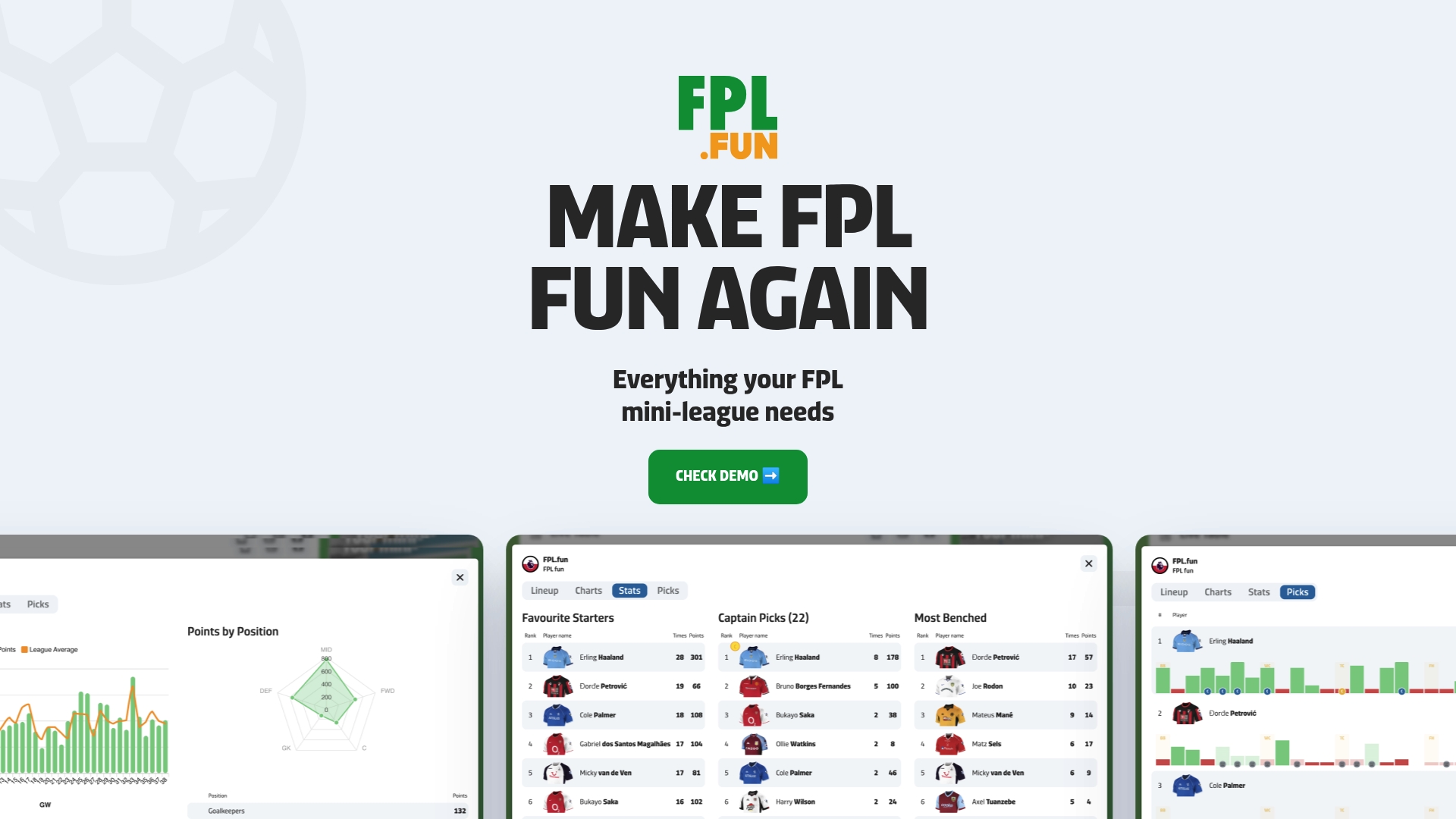
FPL fun is built for exactly the moment this article is about: standing over a deadline, trying to decide whether your captain pick is actually the smart one or just the popular one. Live standings show your mini-league rank shift in real time, the captain tracker flags how your rivals are leaning before kick-off, and automatic substitution alerts confirm the second your captain's minutes are safe, without fifteen browser tabs open.
If you manage a league with mates who take their banter as seriously as their rank, the League Access plan unlocks history archiving and rival insight on top of the live data. Start with the Fantasy Premier League Tutorial to see the tools in action before your next Triple Captain decision, or check live standings right now to see where your league sits heading into the next deadline.
Sources
- When is the best time to play your FPL chips? | Premier League
- Triple Captain rules explained | Full90 FPL
FAQ
When should you use your Triple Captain?
Most managers should save it for a double gameweek on a nailed, penalty-taking premium player, since two fixtures lower your variance compared with one. The main exception is an early single fixture that's exceptionally favourable with minimal rotation risk, as seen with Haaland's record GW3 activation numbers.
How do you play the Triple Captain in FPL?
Activate the chip from your squad screen before the gameweek deadline, and it triples your captain's points instead of doubling them, for that gameweek only. You get one activation before the Gameweek 19 reset and a second afterwards, and you can cancel it any time before the deadline.
Should you Triple Captain Haaland?
Haaland's minutes reliability and penalty duty make him a repeated favourite for both early single fixtures and double gameweeks alike.
Should I Triple Captain in Gameweek 33?
It depends entirely on whether the gameweek features a double fixture that year and who's in form with nailed minutes at that point. Check FPL fun's captain tracker closer to the deadline, since fixture congestion and rotation risk shift fast in the run-in.