12 Funny, Safe Mini League Forfeits to Keep Your FPL Group Buzzing

Yes, agreed forfeits keep mini-leagues lively. Pick one your group genuinely accepts, add a couple of clear safety rules, and let the bottom-of-the-table dread take care of the rest. A small mini-forfeit system, topped off with a bigger end-of-season punishment, is what stops your league going quiet by February and keeps the group chat buzzing every gameweek.
TL;DR:
- Most mini-league forfeits focus on humorous public performances like TikTok dances or cardboard cutout dates rather than painful or risky tasks.
- Establishing clear, written rules and obtaining consent before the season starts reduces disputes and ensures everyone agrees on the forfeit's scope and limits.
- Regular in-season mini-forfeits and weekly awards keep bottom managers engaged and prevent league burnout before the final season standings.
- Using real-time standings and automated tools minimizes arguments over last-place finishing and increases ongoing league engagement.
- Keeping forfeits safe, consensual, and appropriate to group comfort levels strengthens league camaraderie rather than causing disputes or disinterest.
Table of Contents
- What are mini league forfeits, exactly?
- Quick shortlist: 12 forfeits your league can steal today
- Choosing a forfeit style that fits your group
- How do you agree forfeit rules without causing a fallout?
- Keep the bottom of the table interesting all season
- Running the forfeit event itself
- Why consensual, public forfeits usually strengthen a league rather than sink it
- How FPL.fun takes the admin (and arguments) out of forfeits
- Sources
What are mini league forfeits, exactly?
A mini league forfeit is a pre-agreed penalty, usually a bit of public embarrassment, that the bottom-placed manager in your FPL mini-league has to complete once the season ends. Some leagues call them "punishments," others "forfeits" or "loser's tasks," but they're all the same idea: give people a reason to care even when they're mathematically finished for the title.
The best ones aren't cruel. They're funny. BBC Sport's roundup of real FPL forfeits found that the most popular options lean towards public performance and mild humiliation rather than anything genuinely painful. TikTok dances, novelty haircuts, and cardboard cutout dates all outrank anything involving real physical risk. That's the tone you want to aim for.

Quick shortlist: 12 forfeits your league can steal today
These are drawn from the ideas that keep coming up across community threads, sports outlets, and actual mini-leagues that have run them successfully. Each one includes a way to soften it if your group prefers lower stakes.
- TikTok dance challenge. The loser learns and posts a trending dance, filmed in a public place. Softer version: film it at home, no public setting required.
- Open-mic comedy set. Five minutes at a local open-mic night, ideally one that already exists rather than one you have to book. Costs nothing but nerve.
- Rival kit day. Full kit of the club they hate most, worn to work, school run, or the supermarket for a full day. Scale down to "just the shirt" for anyone who genuinely can't wear it in public.
- Host-and-pay FPL night. The loser organises and foots the bill for the whole group's next get-together. Cap the spend in advance so nobody's paying for a banquet.
- Spicy food challenge. A Carolina Reaper wing or hot sauce shot, timed and filmed. Always build in a medical opt-out, this one genuinely isn't for everyone.
- R9 haircut. Ronaldo's infamous 2002 buzz cut, or any equally daft style. Consent is non-negotiable here since it's the one forfeit that outlasts the joke by several weeks.
- Cardboard-celebrity dinner. A "date night" with a life-size cardboard cutout of a footballer, photographed at a restaurant. Cheap, harmless, and reliably ridiculous on camera.
- Pay the end-of-season bill. Whoever finishes bottom covers the group's final meal or drinks tab. Simple, low-drama, works for groups who hate public stunts.
- Busk until £10. Stand in a public spot and busk (badly, ideally) until £10 has been earned. Set a time limit so nobody's out there till midnight.
- Wear the mascot outfit to a match. If anyone in the league owns or can borrow a mascot costume, wear it to a live game. Adapt to "wear it to the pub" if match access is tricky.
- Staged press conference. Loser sits behind a table with branded water bottles and answers scripted, mocking questions from the group, filmed and shared in the chat.
- Temporary tattoo instead of permanent. If your group votes for a tattoo forfeit, insist on henna or temporary ink. A real tattoo forfeit is the fastest way to end a friendship over a game.
GiveMeSport's ranked list of forfeit ideas backs up several of these, and it consistently recommends cost caps and safety precautions alongside the fun ones, which is worth remembering before your group votes on anything extreme.
Choosing a forfeit style that fits your group
Not every league has the same appetite for embarrassment. Some groups will happily film a mate in a chicken costume outside a train station; others would rather nobody left the house. Matching the forfeit category to your group's temperament matters more than finding the "funniest" idea online.
- Social or performative: open-mic sets, staged interviews, dance challenges. Low cost, high shareability, easy to soften by filming privately instead of in public.
- Attire-based: rival kits, mascot outfits, fancy dress at the school gates. Adjustable by location, wear it at home rather than in public if someone's uncomfortable.
- Physical or endurance: spicy food, cold-water dips, short fitness challenges. These need the tightest safety limits and should always carry an opt-out.
- Financial: paying the bill, funding the next social, buying the group's shirts. Predictable, low-risk, and a good fallback for leagues who don't fancy public stunts at all.
- Online or social-media based: posting a scripted apology video, a mock transfer announcement, a cringeworthy caption competition. Easy to run remotely, works well for leagues scattered across different cities.
- Permanent or long-term: tattoos, dyed hair that won't wash out, anything that outlasts the joke. Avoid these unless every single member has agreed in writing, and even then, offer a temporary substitute.
Steer away from anything that could genuinely damage someone's reputation at work or embarrass them in front of family who didn't sign up for the joke. Fantasy Football Scout's roundup of the best mini-league forfeits sticks almost entirely to the social and financial categories for exactly this reason. They're funny without being risky.
How do you agree forfeit rules without causing a fallout?
Announce the forfeit at the start of the season, not gameweek 30 when someone's already staring at bottom place. Community threads on this are consistent: leagues that vote on the punishment before a ball is kicked have far fewer arguments than leagues that try to decide it retrospectively, when the loser has every incentive to fight it.
Write the rule down. A one-line message in the group chat gets forgotten or "misremembered" by June. A shared document or pinned message doesn't.
Before the season starts, your league should agree on:
- The exact forfeit, described specifically enough that nobody can argue about interpretation later.
- Scope and limits, including any built-in medical or personal opt-outs.
- A cost cap, if money's involved, so the loser isn't left thousands of pounds worse off.
- Venue and time boundaries, so the forfeit happens somewhere and sometime everyone's comfortable with.
- Filming and privacy permissions, agreed in advance rather than sprung on someone after the fact.
- Who organises it, usually the runner-up or a neutral admin, to avoid the loser marking their own homework.
- An appeal process, for genuine hardship cases like injury, job clashes, or family circumstances.
Red flags to rule out completely: anything involving forced drinking, unsafe physical stunts, or tasks that only work if someone's humiliated in front of people who never agreed to the joke. Fantasy Football Scout notes that requiring signed consent for any filmed forfeit, and offering a private alternative, protects both privacy and the group's legal exposure.
Pro Tip: Put the forfeit rule in writing before deadline 1 of the season, not after. Leagues that agree the punishment early see far fewer disputes than leagues that try to negotiate it once someone's already bottom.
Keep the bottom of the table interesting all season
The grand forfeit only lands well if people have stayed engaged long enough to care about it. That means giving your bottom-table managers something to dread, or laugh about, every few gameweeks, not just in May.
- Set monthly mini-forfeits. Whoever has the lowest score in a given month gets a small, low-stakes task, buying the round, wearing a silly hat to the next meet-up, changing their team name to something embarrassing for a week.
- Build a "wall of shame." A running record, pinned in the group chat or tracked through FPL.fun, of who's spent the most weeks at the bottom. Visibility is the whole point.
- Use weekly awards to soften the blow. A "worst captain pick" or "biggest bench flop" badge each week keeps things funny rather than purely punitive, and gives even mid-table managers something to react to.
- Escalate carefully. Reserve the biggest forfeit for the end-of-season overall finisher, and keep the in-season penalties small enough that nobody's tempted to just quit the league in October.
This is where a lot of leagues quietly die. The main reason mini-leagues go dead is that bottom-half managers stop checking in once they're out of title contention, and mini-forfeits are one of the cheapest ways to stop that happening.
Running the forfeit event itself
Once the season ends, the forfeit becomes an event, and events need a bit of planning. Sort the venue, agree who's paying for what, and check transport before locking in a date, especially if the forfeit involves alcohol, travel, or anything physical.
- Confirm consent again, closer to the date, in case circumstances have changed since the season-opener agreement.
- Do a quick health check for anything physical or food-based, spice challenges especially.
- Agree filming and sharing permissions on the day, not after the video's already in three group chats.
- Split costs fairly, particularly for host-and-pay nights or venue hire.
Turning the forfeit into a shared social event, rather than pure humiliation, tends to land better with the group as a whole. GiveMeSport suggests framing costly forfeits as a charity donation or a shared-cost social, which reduces resentment and gives the loser a better story to tell afterwards than "I got mocked for an hour." Keeping a record of who's done what, and when, also makes next season's rules easier to write. FPL.fun is built for exactly that.
Why consensual, public forfeits usually strengthen a league rather than sink it
The leagues that fall apart aren't the ones with harsh forfeits. They're the ones with no forfeit at all, where half the group stops caring by Christmas because there's nothing to play for beyond bragging rights nobody's bragging about. A forfeit, even a daft one, gives every gameweek a second storyline running underneath the title race.
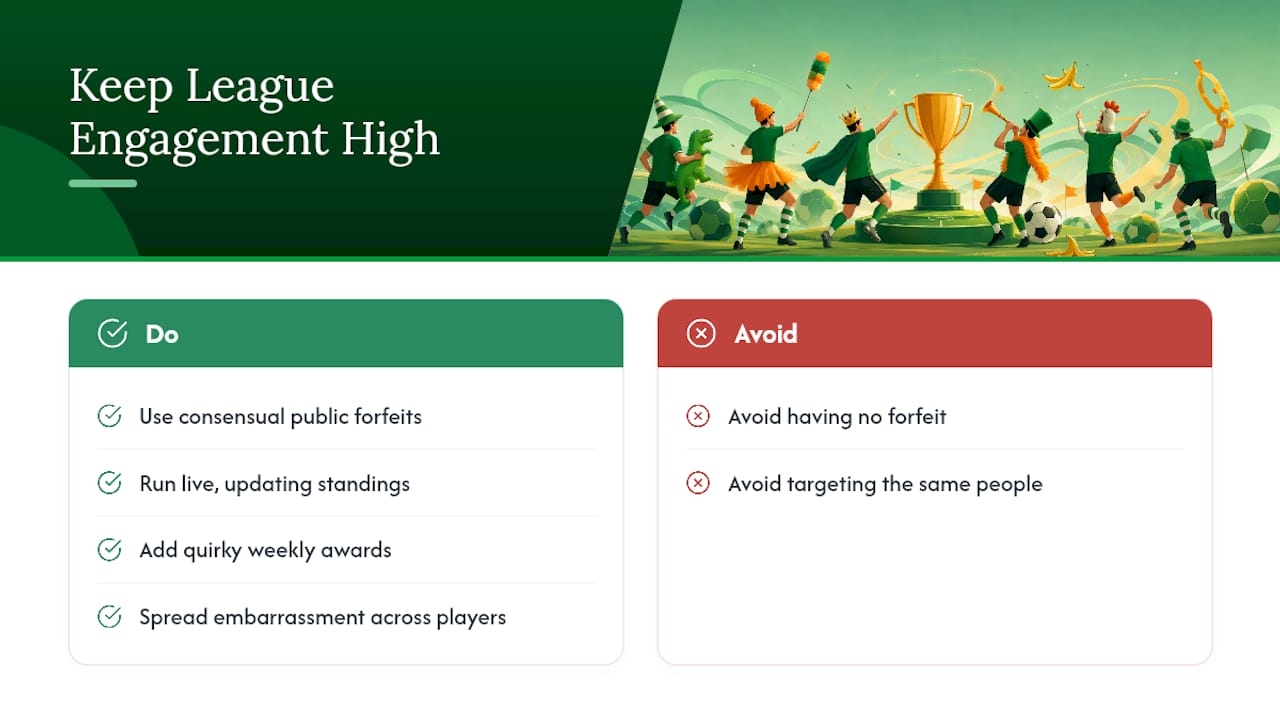
What surprises people is that the threat of the forfeit does more work than the forfeit itself. Knowing your name could end up on a wall of shame, or that you might be filmed in a cardboard-cutout date, keeps you checking your team on a Friday night even when you're 40 points off top spot. That's the entire point of running live standings and weekly awards alongside your forfeit system: the banter needs fuel, and a scoreboard that updates in real time gives it plenty.
Use the tools already available to you. Live standings turn "who's bottom" into a running joke people check obsessively, and quirky weekly awards spread the embarrassment (and the laughs) around so it isn't always aimed at the same one or two people.
— Przemek
How FPL.fun takes the admin (and arguments) out of forfeits
Running a forfeit system by memory and group-chat scrolling is how leagues end up arguing about who was actually bottom in gameweek 19. Instant standings appear the moment matches finish, so there's no ambiguity about who's facing the mascot outfit or the open-mic slot.
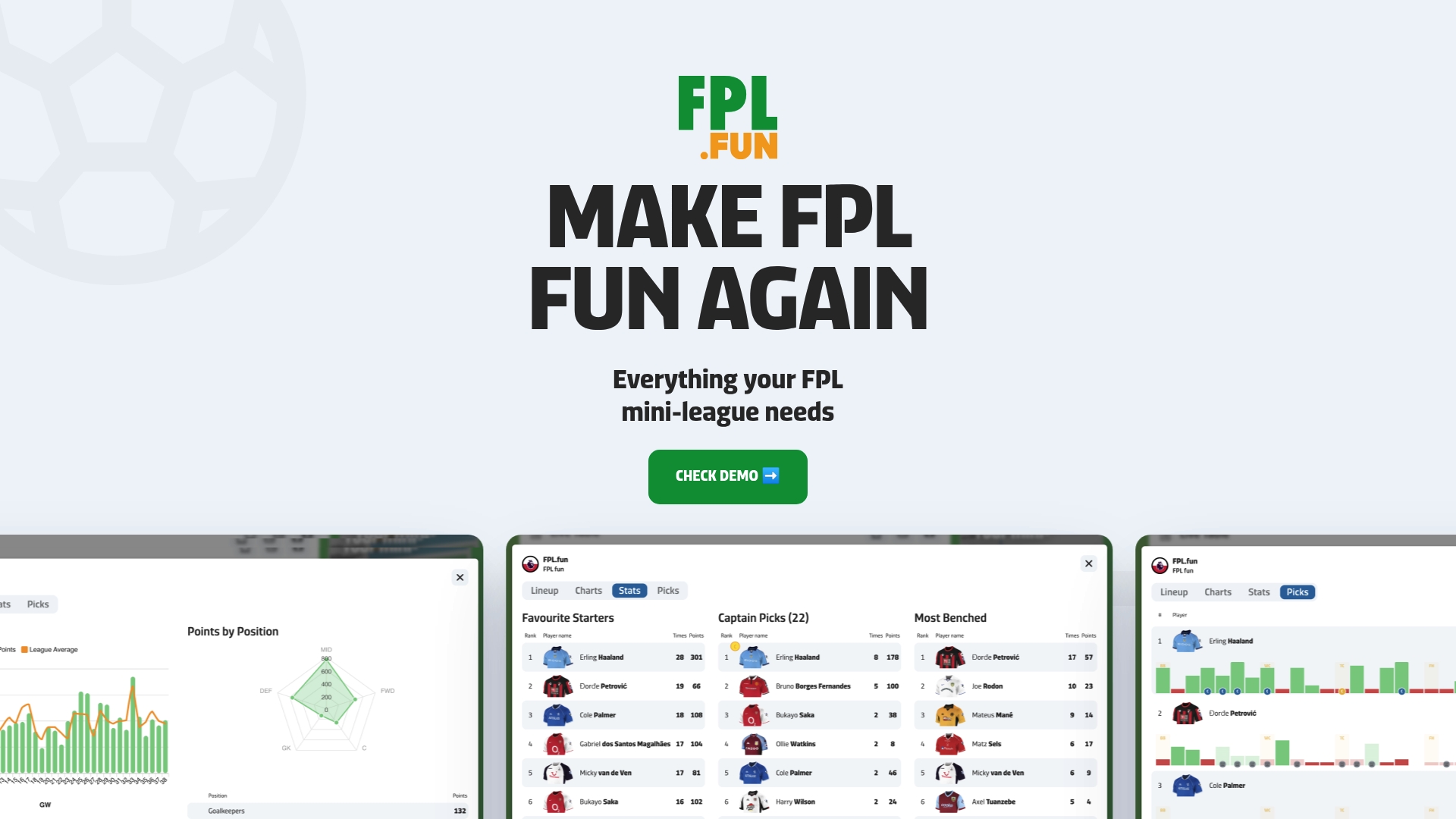
Weekly awards flag worst captain picks and biggest bench disasters automatically, which spreads the banter across the whole league rather than always landing on the same manager. Shareable visuals turn your wall of shame into something you can post in the group chat, and league history archiving means next season's rule-setting starts from a record, not a memory. If you're setting up forfeit rules for a new season, the Fantasy Premier League tutorial walks you through getting your league set up properly from gameweek one.
Sources
- FPL forfeits: TikTok dances, R9 trims and Taylor Swift dates - BBC Sport
- 15 Funniest Forfeit Ideas for Fantasy Premier League (Ranked)
- 7 of the best mini-league forfeits for last-placed FPL managers! - Fantasy Football Scout