2026/27 FPL set piece takers: confirmed club picks and minute checks

FPL publishes its official set-piece hierarchy in The Scout and the FPL app, updated as duties shift during the season. This article gives you that reference club by club, then shows you how to actually use it, cross-checked against projected minutes so you are not caught out backing a name who is about to be dropped. Trackers like FBRef and independent sites help fill the gaps between official updates, and FPL.fun's live standings help you spot changes the moment they happen on a matchday.
TL;DR:
- Set-piece duties frequently change due to managerial shifts, injuries, and penalty misses, so regularly verify the hierarchy every few gameweeks.
- Using players like Groß and Fernandes offers the most value because they handle penalties, free-kicks, and corners, covering multiple scoring routes.
- Check projected minutes, team news, and fixture difficulty alongside the official hierarchy before transferring or captaining based on set-piece takers.
- Direct free-kicks by players like Fernandes and Szoboszlai generate goal potential, while indirect set pieces like corners mainly boost assist and bonus points.
- FPL.fun provides real-time tracking of on-pitch set-piece takers during matches, giving a tactical edge over static official lists.
Table of Contents
- Who takes set pieces for every Premier League club?
- How do I use set-piece data for transfers and captaincy?
- Which set-piece assets actually move the needle?
- How does FPL.fun help you track promoted takers?
- How reliable are set-piece takers across a season?
- Do tactics and opponents change set-piece success rates?
- Direct free-kicks vs indirect set pieces: what's the scoring difference?
- Balancing set-piece value with squad structure
- Try FPL.fun to stay ahead of mid-season set-piece changes
- Where to verify set-piece takers and minutes
- Sources
- FAQ
Who takes set pieces for every Premier League club?
This is the bit you actually came for, so let's get into it. The order below reflects each club's published hierarchy for penalties, direct free-kicks, and corners, cross-checked against how minutes are trending. Where the nominal first choice is a rotation risk or fringe starter, I've flagged the more actionable pick.
A handful of players hold multiple dead-ball duties at once. Pascal Groß at Brighton is the textbook triple-threat: penalties, free-kicks, and corners all funnel through him when he starts, which makes him one of the highest floor set-piece assets in the game regardless of price point. Bruno Fernandes at Manchester United carries a similarly loaded portfolio, taking penalties and most direct free-kicks while also whipping in a large share of corners.
Here's how the picture looks across the rest of the league:
- Manchester City: Erling Haaland takes penalties; free-kicks rotate depending on shooting angle, often shared between midfielders; corners are usually delivered by wide players rather than a fixed specialist.
- Chelsea: Cole Palmer is first-choice penalty taker and handles most direct free-kicks in shooting range; corners tend to go to whoever is on the near or far side depending on the phase.
- Newcastle: Alexander Isak has taken penalties when fit and involved; corners and out-wide free-kicks are typically shared among the wide players and full-backs.
- Everton: Iliman Ndiaye has featured prominently on penalties and free-kicks since his move, giving Everton a genuine dead-ball focal point in an otherwise thin attack.
- Brighton: as mentioned above, Groß dominates all three categories when fit, though Brighton will lean on a rotation option if he is rested or injured.
- Manchester United: Fernandes leads on penalties and free-kicks; corners are shared but he remains heavily involved.
- West Ham: Ryan Giles has been used on set-piece delivery duties following his move, particularly on corners and out-wide free-kicks from the left.
- Newcastle (wide deliveries): alongside Isak's penalties, delivery responsibilities from corners often fall to specialist crossers rather than a single nominated taker.
- Wolves: Marcelino Núñez has taken on dead-ball responsibility since arriving, sharing penalty and free-kick duties depending on matchday selection.
- Aston Villa: Matty Cash has been used on corner and wide free-kick delivery, giving him a route to assists beyond his defensive output.
- Nottingham Forest: Neco Williams has picked up delivery duties from the right, particularly on corners, adding a defensive-asset angle for FPL squads short on cash.
- Sunderland: Enzo Le Fee has emerged as a dead-ball option following his move, sharing free-kick and corner duties in the final third.
- Liverpool: Dominik Szoboszlai has taken penalties and free-kicks at various points, and remains one of the more reliable delivery options from corners when he starts centrally.
That list will shift. Managers get promoted, injuries happen, and a poor run of penalty misses can see a club change its taker overnight. This is exactly why the official set-piece hierarchy in The Scout matters more than any preseason assumption: it updates as the picture changes, and you should treat it as the baseline rather than the final word.
Pro Tip: Bookmark the official set-piece takers page and check it every Thursday before the deadline. Duties change more often mid-season than most managers assume, especially after a transfer window closes.
How do I use set-piece data for transfers and captaincy?
Knowing who takes corners is worthless if that player is not actually going to start. The real skill in using set piece takers FPL data is cross-referencing the published order against team news, projected minutes and fixture context before you commit a transfer or armband.
Here's the sequence I'd run through every gameweek:
- Check the official order. Start with The Scout's set-piece table or the app's Set Piece Takers button to confirm the current nominated hierarchy.
- Verify starter minutes. If the listed first-choice is coming back from injury, rotation-prone, or has played under 60 minutes in recent matches, assume the second name on the list is your realistic pick. Cross-referencing published orders with projected minutes regularly reveals these promotions before the wider market catches on.
- Check ownership and fixture difficulty. A promoted taker in a great fixture with low ownership is a differential; the same player against a top-four defence is a much weaker case.
- Act, don't wait. If all three checks align, make the transfer or set the captaincy before news breaks widely and the price or ownership shifts against you.
Chips deserve their own logic here. A heavily loaded set-piece asset, someone taking penalties and free-kicks with strong fixtures, is a natural Triple Captain candidate, particularly in a gameweek where their side is expected to dominate territory. Bench Boost works best when your whole squad's set-piece duties are confirmed and nobody is a doubt, since a single unexpected benching undoes the value of the chip. With record numbers of managers using Bench Boost in Gameweek 1, and two full sets of chips available across 2026/27, timing matters as much as the pick itself.
Which set-piece assets actually move the needle?
Not every set-piece taker is worth a squad slot. The players worth prioritising fall into three rough profiles, and each has a different job in your team.
- Triple-threats: players like Groß and Fernandes who combine penalties, free-kicks and corners into one player. These are the highest points-per-million assets in the game when fit, because a single roster spot covers three scoring routes.
- Premium options with minutes security: nailed starters on penalty duty at clubs likely to dominate games. Haaland and Palmer sit here, backed by high ownership because the floor is so consistent.
- Budget enablers: cheaper players who hold a genuine dead-ball route even without full attacking involvement, such as defenders on corner-delivery duty. Cash, Williams and Giles all fit this bracket, offering assist upside from a position that rarely costs much of your budget.
Triple-threats are rare enough that when one appears at a reasonable price, it is usually worth prioritising over a marginally better fixture elsewhere. The value comes from concentration: three scoring routes through one player beats three separate squad slots each carrying one route.
How does FPL.fun help you track promoted takers?
The Scout tells you the intended order, but matchday reality moves faster than any published table. Live standings and the automatic substitutions tracker on FPL.fun show you exactly who is on the pitch and picking up bonus points in real time, so a promoted taker shows up in your rivals' scores before most trackers have caught up.
Picture this: the listed first-choice free-kick taker is left out of the matchday squad entirely. You would not know that from a table updated on Thursday. But watch live standings during kick-off, and you will see the backup's involvement (and points) climb before the final whistle, giving you a jump on next week's transfer before the price shifts.
How reliable are set-piece takers across a season?
Set-piece duties are far less fixed than most managers assume heading into August. A taker who looks nailed in Gameweek 1 can lose the job by Gameweek 10 through a poor penalty record, a change of manager, or simply a new signing arriving with a reputation for dead-ball delivery.
Managerial changes are the single biggest disruptor. A new head coach frequently reshuffles set-piece responsibility within weeks of arriving, regardless of how the previous regime had it set up. Injuries create the second major disruption category, particularly when a club's only recognised penalty taker misses a stretch of games and a temporary hierarchy emerges that sometimes becomes permanent.
Confidence swings matter too. A missed penalty in a big match can see a manager switch takers the following week, even when the underlying data does not support the change. This is where hand-curated trackers cross-checked against FBRef data earn their keep: they catch these in-season pivots faster than a purely official source that updates on its own schedule. The practical takeaway is straightforward. Treat any set-piece order as a snapshot, not a guarantee, and revisit it every few gameweeks rather than assuming August's hierarchy holds until May.

Do tactics and opponents change set-piece success rates?
Set-piece output depends heavily on the team delivering the ball, not just the individual taker. A side that plays a high, aggressive defensive line and commits numbers forward on corners will generate more genuine scoring chances from dead balls than a counter-attacking side that keeps players back to avoid being caught out.
Opposition matters just as much. Teams that defend with a settled back four and strong aerial presence concede far fewer set-piece goals than sides who zonal-mark inconsistently or lack height at the back. This is why a corner specialist's underlying delivery quality only tells half the story. You also need to weigh the fixture: a set-piece heavy team against a poor aerial defence is a genuinely different proposition to the same team against a side built to nullify exactly that threat.
This is the layer most FPL managers skip. It is easy to see "takes corners" on a list and stop there, but the value of that role swings hugely depending on who is on the end of the delivery and how the opposition defends crosses into the box. Cross-referencing fixture difficulty with a club's attacking set-piece tendencies, rather than just the taker's name, tends to separate the managers who profit from dead-ball picks from those who just own the popular name.
Direct free-kicks vs indirect set pieces: what's the scoring difference?
A direct free-kick is a shot on goal, and that distinction changes everything about how you should value it in FPL terms. Players who strike direct free-kicks well, Fernandes and Szoboszlai among them, carry a genuine goal threat that shows up independently of open-play form, because a single well-struck free-kick can return points regardless of how the rest of the match has gone.
Indirect set pieces, corners and free-kicks delivered into the box, work completely differently. The taker rarely scores from these; instead, the value flows through assist potential and the expected-assists metric that FPL managers increasingly lean on when picking wide players and full-backs. A player like Cash or Williams will almost never register a goal from a corner they take, but a consistent supply of well-placed deliveries into a crowded box builds assist numbers over a season.
This split matters when you are deciding between two similarly priced players. A direct free-kick specialist offers spiky, low-frequency goal returns. A corner or indirect free-kick specialist offers a steadier assist stream, provided their teammates are winning the aerial battle in the box. Knowing which type of set piece a player actually takes, not just that they "take set pieces," should shape whether you are buying for goals or for assists.

Balancing set-piece value with squad structure
My honest view: own one premium set-piece asset and one promoted second-choice where the fixtures justify it, then stop chasing. Loading three or four squad slots purely for dead-ball duties leaves you exposed on minutes and fixtures elsewhere, and a rotation risk with great corner numbers is still a rotation risk.
— Przemek
Try FPL.fun to stay ahead of mid-season set-piece changes
FPL.fun gives your mini-league the one thing The Scout can't: live visibility into who's actually on the pitch delivering those corners and free-kicks, updated as the match happens rather than after the final whistle.
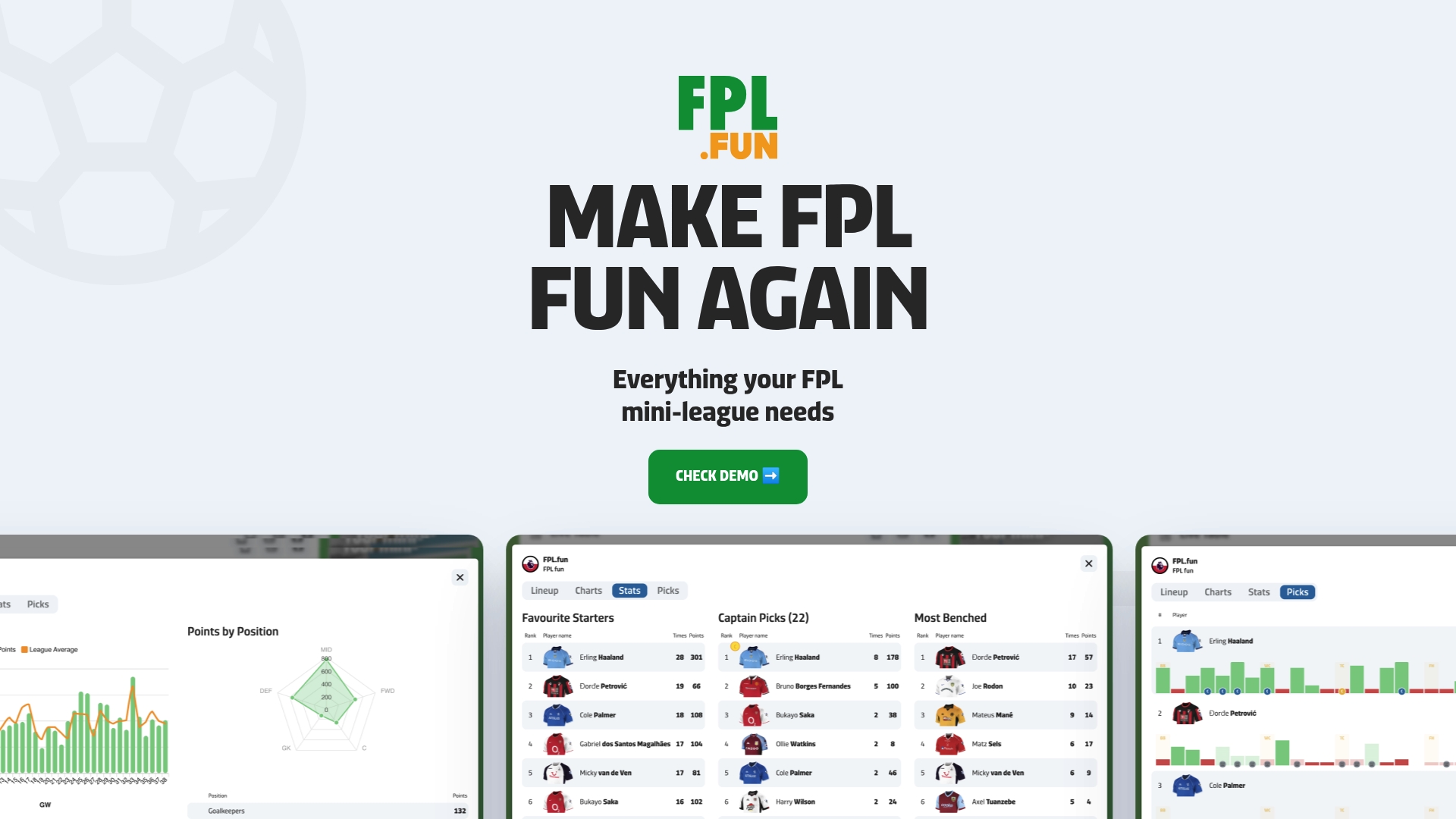
Instead of waiting for Monday's roundup to confirm a promoted taker, you and your leaguemates see it unfold through live standings, real-time bonus points and the automatic substitutions tracker, all without refreshing five different tabs. It pairs neatly with the official set-piece order, giving you the intended hierarchy from The Scout and the on-pitch reality from FPL.fun in the same glance. Subscription plans unlock full league history and weekly awards that keep banter running long after the final whistle; current prices are available on the pricing page. Head to FPL.fun to see your mini-league update in real time this gameweek.
Where to verify set-piece takers and minutes
- FPL set-piece hierarchy updates — Premier League's own reporting on taker changes.
- The Scout's Set-Piece Takers table — official FPL reference.
- Onside's hand-curated set-piece tracker — cross-checked against FBRef data weekly.
- BetsyScore lineups and match previews — confirms starters before deadline.
Sources
- FPL set-pieces: Stay up to date with the key players
- Set-Piece Takers, Player Statistics | Fantasy Premier League
- FPL Penalty Takers 26/27: Every Club's List | FPL Oracle
- PL Set-Piece Takers 2026/27 — Penalties, Free Kicks & Corners | Onside
FAQ
Where do I find the official set-piece takers list?
The official set-piece hierarchy sits under The Scout on the FPL website, or under the Set Piece Takers button on the app's main menu. It updates during the season as duties shift between players.
What if the listed penalty taker isn't starting?
Treat the second name on the published order as your actionable pick once minutes or team news confirm the first choice is out. This is exactly the kind of promotion that cross-referencing minutes with the published order is designed to catch.
Which players hold multiple set-piece duties?
Pascal Groß and Bruno Fernandes are the clearest current triple-threats, each combining penalties, free-kicks and corners for their clubs. Owning one of these players concentrates several scoring routes into a single squad slot.
How often do set-piece takers change during a season?
More often than most managers expect. Managerial changes, injuries and a run of missed penalties can all trigger a switch, so it's worth checking the order every few gameweeks rather than assuming it holds from August.
Does FPL.fun replace the official set-piece list?
No, FPL.fun complements it rather than replacing it. It gives you live standings and an automatic substitutions tracker so you can see a promoted taker's impact unfold in real time, while The Scout remains the source for the intended hierarchy.