Choose Between £6.5m Midfielders Fast Using the FPL ICT Index

The ICT Index is a single number that stacks Influence, Creativity and Threat into one score, built so you can compare any two FPL players on neutral ground, enhanced by post-match stats worth reviewing after every game. It is useful because it flags who is genuinely involved, who creates chances and who is likely to score, all before you commit a transfer or a captain pick. Glance at it before the deadline, not after.
TL;DR:
- Players with high Influence tend to be involved consistently across multiple matches, making them reliable picks for steady points.
- Sustained Creativity over several games usually signals a midfielder's ongoing assist potential, even if they go through quiet spells.
- Relying solely on Threat for captain picks is risky unless the player’s scoring potential has shown stability over multiple fixtures.
- Comparing ICT components alongside fixture difficulty and recent form improves decision accuracy more than focusing on one metric alone.
- Checking the last three matches' ICT trends helps avoid transfer errors caused by temporary spikes from single outstanding performances.
Table of Contents
- What ICT measures: influence, creativity and threat explained
- How ICT is computed and where to find the numbers in the FPL interface
- How to use ICT in decisions: transfers, captaincy and bench strategy
- Common mistakes and practical tips when using the ICT Index
- Worked example: using ICT to choose between two similarly priced players
- Publisher perspective: turning ICT signals into live mini-league moves
- Consider FPL.fun as an adjunct for live mini-league play
- Sources
- FAQ
What ICT measures: influence, creativity and threat explained
Each letter in ICT is its own mini-score, and together they're meant to catch a player's full contribution, not just goals and assists.
- Influence tracks a player's overall imprint on a match, the build-up play, the defensive actions, the moments where they're simply all over the pitch.
- Creativity measures chance creation, things like key passes and the kind of expected-assist events that suggest a player is feeding others, even on a quiet day for actual assists.
- Threat gauges how likely a player is to score, and it leans hard on shots from good positions rather than just counting attempts.
The official explainer from the Premier League confirms the Index condenses more than 40 match event statistics into these three components before rolling them into an overall score. That's the bit worth remembering: ICT isn't a vibe, it's dozens of data points squashed into something you can scan in two seconds.
How ICT is computed and where to find the numbers in the FPL interface
You don't need to know the exact maths behind ICT to use it well, but it helps to know it's built from a wide net of in-game events rather than one or two headline stats. The same Premier League piece is clear that the components exist precisely so managers can judge a player's involvement, creation and scoring threat side by side, rather than guessing from the highlights reel.
Finding the numbers takes under a minute once you know where to look.
- Open the Statistics page on the official FPL site and sort by Influence, Creativity, Threat or overall ICT.
- Use the Transfers screen's dropdown filters to rank players by any single component.
- Tap the small "I" icon on a player's profile for their full breakdown, confirmed as a standard access point across the FPL interface.
- For quick scouting across the whole league, a third-party ICT table gives you a sortable list with price and ownership alongside the three components.
Once you've got a shortlist up on screen, comparing two or three names takes seconds rather than a full evening of scrolling.
How to use ICT in decisions: transfers, captaincy and bench strategy
Here's where it actually earns its place in your routine. Different decisions call for different components, and knowing which one to weight changes how you read the table.
- Lean on Threat when you're picking a captain or chasing a goal-scoring striker, since it's built to flag who gets the best shots, not just the most shots.
- Lean on Creativity when you want a midfielder who keeps setting up chances even in weeks where the assist column stays blank.
- Lean on Influence when you want a reliable, week-in-week-out presence, the kind of player who won't blank even on a bad day.
None of that works in isolation, though. A Premier League feature on getting the most from the Index stresses that ICT is strongest when you're comparing similarly priced players across different teams, precisely because it normalises very different event types into one scale. Always run ICT alongside Fixture Difficulty Rating and recent team form, a habit confirmed by further Premier League guidance as the safer way to avoid a blind transfer. If you're eyeing a captain swap late in the week, our captain picks tracker is built for exactly that last-minute comparison.
Timing matters too. Before a double gameweek, check whether a player's Threat and Influence hold up across both fixtures, not just the easier one, and keep an eye on minutes risk before committing a chip. Managers chasing a comeback in their mini-league are often told to focus on Influence and Threat specifically, according to expert commentary from the Premier League, since those two components tend to surface the highest-impact moves fastest.
Pro Tip: Before any transfer, check the player's ICT trend over their last three matches, not just the season total, so you're not buying into a single good game.

Common mistakes and practical tips when using the ICT Index
ICT is a brilliant shortcut, but it's not the whole picture, and treating it as gospel is how managers end up with a bench full of one-week wonders.
- Don't transfer in on ICT alone. Check minutes played, rotation risk and the underlying expected goals and assists first.
- Watch out for a single big match inflating a score. One monster Threat rating after one game is a spike, not a trend.
- Favour players with steady component strength over several matches rather than one dramatic outlier.
- Before you confirm a move, ask: is this consistent over three-plus games, are they starting regularly, and does the fixture list actually suit the component I'm chasing?
If you want a longer view of how one big haul can skew perception, our piece on saving your FPL history is a useful companion read.
Worked example: using ICT to choose between two similarly priced players
Say you're torn between two midfielders both priced at £6.5m.
- Player A has strong Creativity and solid Influence, but modest Threat, and faces two matches rated as favourable on the Fixture Difficulty Rating.
- Player B has a huge Threat spike from one match, otherwise ordinary Influence, and is nursing a minutes concern after a recent substitution.
- Weighing fixtures and sample size, Player A is the safer transfer: sustained involvement, a creative role that should keep producing assists, and no rotation doubt.
- Player B might still be worth a captain gamble in a single favourable week, but not a long-term squad slot while his minutes are unclear.
The lesson holds generally: a one-off Threat spike is tempting, but sustained Influence and Creativity across a run of games, backed by a workable fixture list, usually wins the argument. For more on picking between similarly priced options, see our guide on who to pick in Fantasy Premier League.
Publisher perspective: turning ICT signals into live mini-league moves
I built FPL.fun because I got tired of making a smart ICT-backed transfer and then waiting hours to see if it actually worked. Live standings, instant bonus points and auto-subs mean you see the payoff as it happens, not the next morning, and the quirky weekly awards keep the banter going even when your gut call doesn't land.
— Przemek
Consider FPL.fun as an adjunct for live mini-league play
ICT tells you who to pick. FPL.fun tells you, in real time, whether that pick is actually winning you your mini-league.
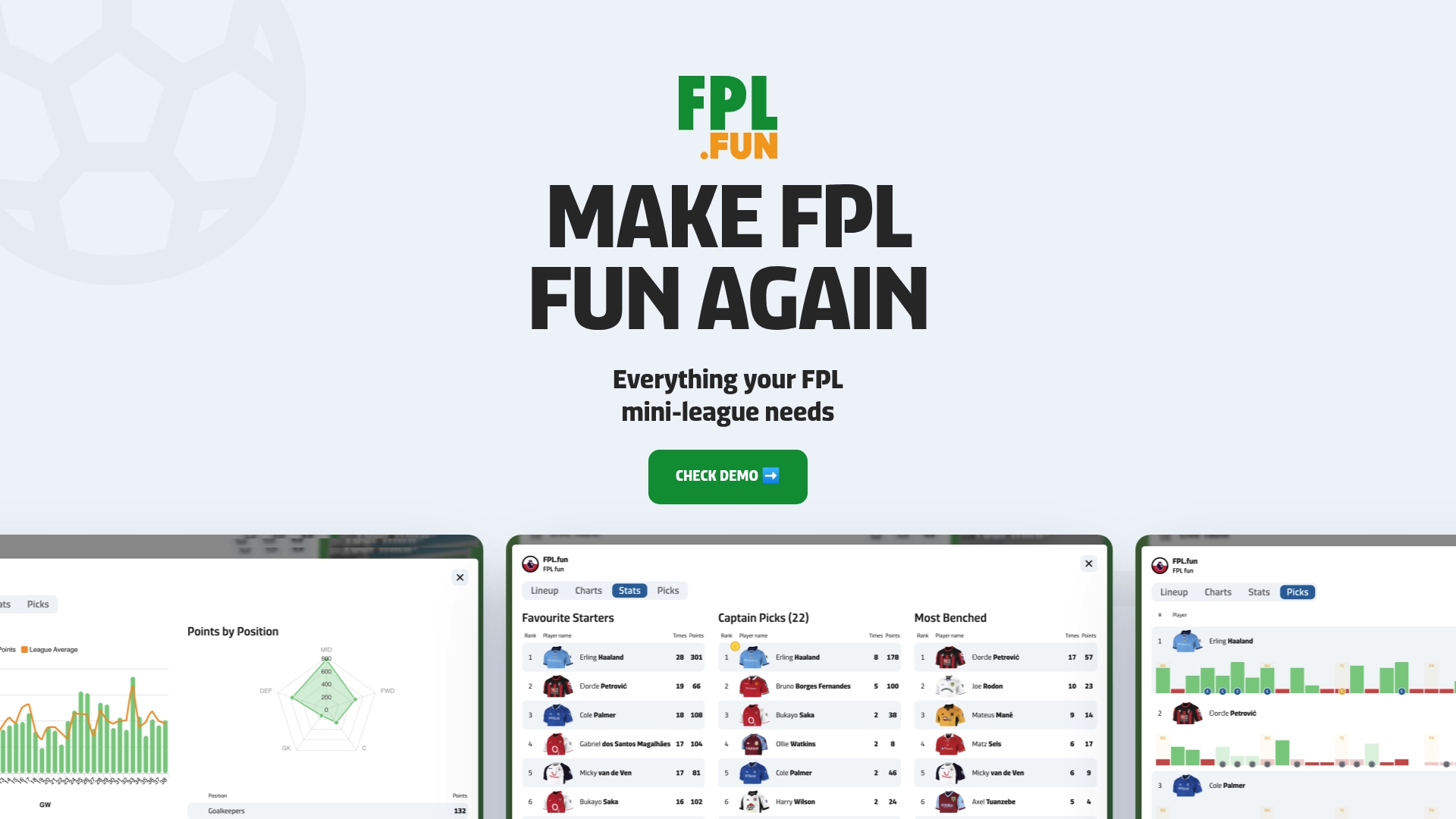
- Live standings update as goals and bonus points land, so you're not stuck refreshing the official site.
- Auto-subs are tracked instantly, which matters when a last-minute ICT-driven captain swap goes wrong.
- Weekly awards and rival insights turn a good ICT call into a proper bragging-rights moment in the group chat.
FPL.fun offers subscription plans with monthly and yearly payment options. For the most current prices, please refer to their pricing page. Check your live standings or find your mini-league ID to get started.
Sources
The primary reference for how the ICT Index is built, useful if you want to check the details yourself.
FAQ
What does ICT stand for in fantasy football?
ICT stands for Influence, Creativity and Threat, the three components that combine into a single FPL score. It's designed to condense more than 40 match event statistics into numbers you can compare across positions and teams.
What is the highest ever FPL score in a week?
This article doesn't cover individual weekly score records, though chip usage during Double Gameweeks is well documented, with Bench Boost deployed 1,301,910 times in DGW37 of the 2023/24 season.
Which gameweek is best for bench boost?
Double Gameweeks are the standard window for Bench Boost, since players from teams with two fixtures get two chances to score, and Bench Boost counts your four substitutes' points as well as your starting XI. The DGW37 2023/24 record for chip usage shows just how heavily managers lean on this timing.
What is the best FPL team right now?
There's no single "best" team since it shifts every gameweek with form, fixtures and price changes. Use ICT alongside Fixture Difficulty Rating and recent form, as Premier League guidance recommends, to build a squad suited to your own chip strategy and rivals.
How do I use ICT alongside fixture difficulty?
Check a player's Influence, Creativity and Threat trend over recent matches, then weigh that against their next few fixtures on the Fixture Difficulty Rating. This combined approach is the best practice Premier League guidance points to, rather than reading either metric alone.